
 XM
XM Bybit
Bybit Binance
 Robinhood
 Webull
 IC Markets
 Pepperstone
 OKX
OKX Vantage
 VT Markets
 BingX
BingX Gate.io
 Kucoin
 MEXC
MEXC Exness
 Bitget
Copy trade originated from the form of Mirror trading (giao dịch phản chiếu) in 2005. Initially, traders copied specific algorithms developed through automated trading.
So, what is Copy trade? How to perform Copy trade? Does Copy trade help investors make a profit? Let’s explore the details about Copy trade with Finance Solutes in this article!
1. WHAT IS COPY TRADE?
Copy trade is a form of portfolio management. The goal of copy trading is to find investors with trading performance that you want to compete with; at the same time, this process allows you to follow the strategies of other successful traders. Similar to any trading system that a trader decides to apply, they achieve the best conditions by closely following experienced investors before deciding to take risks with real capital.
Moreover, copy trade can be useful for traders who do not have time to monitor the market themselves. In general, copy trade focuses on short-term trading, specifically day trading and price action strategies, although various other strategies are used to generate profits.
Copy trade tends to be applied to products in the foreign exchange market, as well as other complex or volatile markets. Although copy trade can generate profits, there are also associated risks, and traders should remember that past results are not a guarantee of future profits.
2. METHODS OF COPY TRADE
There are several ways to copy trades from other investors. For example, a trader can copy all trades, including trade orders, take profits, and stop losses. Alternatively, they can receive notifications about trades and manually copy these trades. This is done through spread betting accounts or CFD trading, two derivative products that allow you to speculate on price movements of an underlying asset without actually owning it.
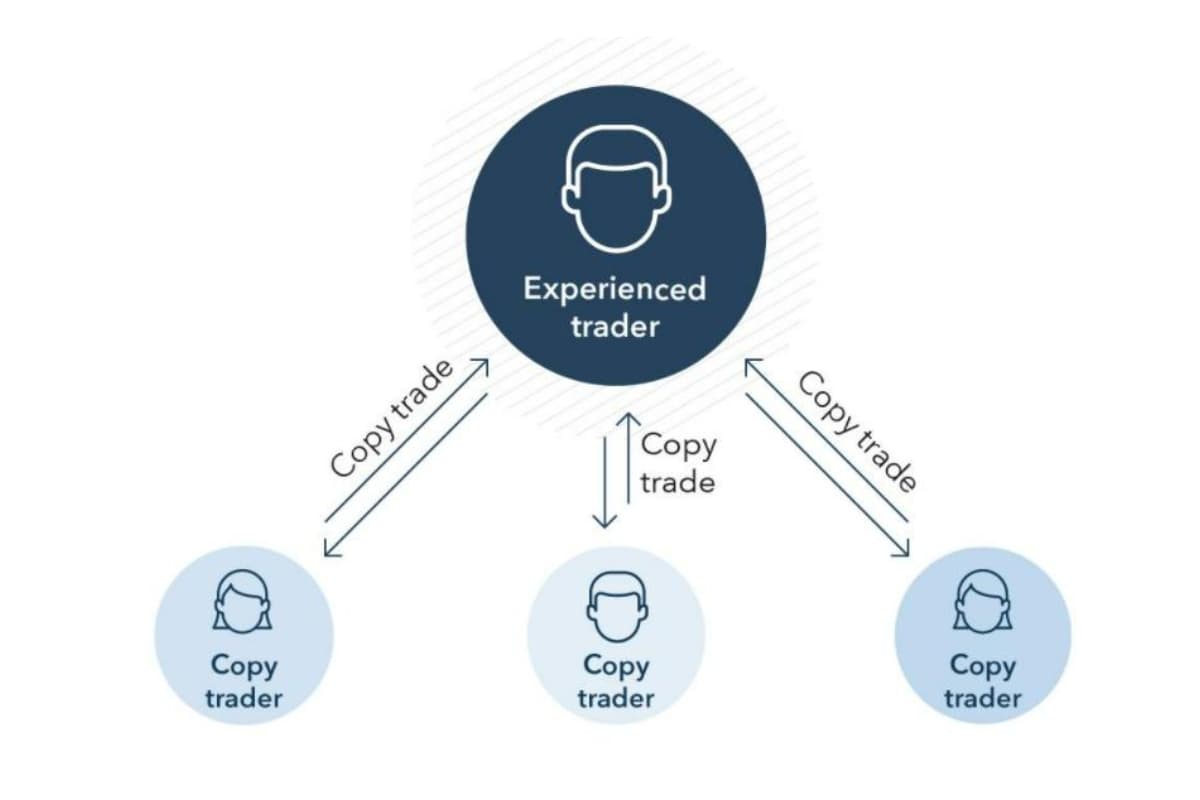
Copy trade allows traders to diversify their investment portfolios. This means a trader is using multiple ways to make money in the market. Instead of putting all their capital into a single position, asset, or strategy, traders can use various trading strategies tailored to each specific market. When copy trading, you should consider copying several different traders.
One way to further diversify your portfolio is to find copy traders who trade different financial instruments. For example, one may copy a forex trader or a commodities trader.
You can also consider copying traders who use different time frames. One person may be a short-term day trader, while another might be a long-term position trader in the stock market, where this strategy is most common.
Traders who experience high volatility in their returns compared to others are also an aspect to evaluate, as it reflects whether they are more or less active traders.
The business model used in copy trading can be profitable. Most copy trading businesses operate on a subscription model, where an individual pays a monthly fee to copy a trader. An alternative model is revenue sharing, where they receive a certain percentage of winning trades.
Copy trade forex

Forex is perhaps the market where copy trade strategies are applied the most. This may be because the foreign exchange market is the largest and most liquid market in the world. Many brokers provide dedicated software for FX copy trading, allowing traders to mimic the trading activities of others in hopes of making a profit.
2. MIRROR TRADING AND COPY TRADING
There is a slight difference between copy trading and mirror trading. The definition of mirror trading is to replicate a trading strategy. Traders imitate the trading style or strategy of other traders. Initially, they focused on specific algorithms that had been developed and shared trading histories. They would search for and select highly profitable algorithms and then copy their results.
On the other hand, copy trading originated from mirror trading, but in this case, the trader does not receive the layout of the strategy from the trader they copy. Instead, they can only passively replicate the trades of that trader.
3. SOCIAL TRADING AND COPY TRADING
Copy trading also shares similarities with social trading. In social trading, investors take ideas from various social trading networks. Traders can share ideas with each other, develop new strategies, and replicate them along with similar tools, while copy traders prefer to precisely copy the positions of a specific trader and their subsequent results.
Social trading is available on online trading platforms, and by opening a live account, you gain access to these chart forums where both professional and amateur traders share information related to strategies, indicators, and news announcements.
4. CAN YOU MAKE A PROFIT FROM COPY TRADING?
Copy trading can bring high profits if you find a successful trader to copy. However, the biggest risk a trader will face in copy trading is market risk.
Specifically, if the strategy you are copying is unsuccessful, you can lose money. Additionally, traders face liquidity risk if the instruments they are trading suffer from low liquidity during market volatility. Finally, traders may face systematic risk if the product they are trading sharply declines or rebounds.

4.1. Market Risk
Market risk relates to the risk of loss due to changes in the price of securities. The goal is to generate profits from the increase in value of the traded asset. Clearly, there is a risk that the asset’s value may decline. Traders can protect themselves from risks beyond their tolerance by using asset allocation strategies. This means only a certain amount of capital is allocated to a specific strategy.
In other words, if a trader allocates all their assets to a single trading strategy, they may face significant losses if an unexpected event occurs, potentially wiping out their entire capital.
4.2. Liquidity Risk
Liquidity risk is described as the situation where a person cannot exit trading positions at the expected level. The risk management approach of a trading strategy should have a documented history so that traders can see the maximum drawdown of the copy trader’s past performance.
Maximum drawdown shows the decline from the peak to the trough during the lifetime of the strategy. This figure is very important because it allows traders to understand the maximum amount of loss they might comfortably endure at any point if they choose to follow the strategy. For example, a copy trader may have a maximum drawdown of 20%. This means a person could lose at least 20% at any time after they start copying the trader.
It is also helpful for traders to gather information about the products and types of assets they are trading. This is because each instrument has different liquidity levels. For example, traders will find it much easier to exit positions in EUR/USD compared to liquidating emerging market currency pairs.
When copy traders focus on emerging market currencies, you should check the slippage factored into their profits—this is a very important point, especially during periods of high volatility.
You should also ensure that the bid/ask spread of the currency pair or security does not erode the copy trader’s profits. Do the copy traders include commission costs in their profit calculations? Copy traders who trade frequently tend to have higher transaction costs.
4.3. Systemic Risk
Emerging market currencies carry higher systemic risk. This means a person’s funds could be locked, and the trader may be unable to exit their positions. This has happened in the past when countries were overthrown and capital was frozen. Although this scenario is very rare, it should be included in a strategy in case such a situation occurs, especially in the forex market.
5. FREQUENTLY ASKED QUESTIONS
5.1. Where can I practice copy trading?
If you want to test copy trading strategies, open a demo account on reputable copy trading platforms to practice with virtual money before entering the real market. This is called backtesting, which helps determine whether a trading strategy was successful in the past.
5.2. Is copy trading suitable for beginners?
Copy trading is an effective strategy for beginners entering the financial markets with limited knowledge or understanding of how things work. However, some experts or professional traders may also choose to use this method if they do not have time to invest or are unfamiliar with a particular market or asset.
6. SUMMARY
In this article, Finance Solutes has explained in detail what copy trading is and whether it can be profitable. Essentially, copy trading is a form of replicating trades from proven successful traders and can be quite effective for new investors seeking profits. However, many surrounding factors can affect the results of copy trading, so careful consideration and thorough evaluation are necessary before deciding to participate.
- t.me/finance_solutes
- Website: https://finance-solutes.com
- Hotline: +1 929 5636 439 ( Hotline )
- 26 Broadway, Suite 934, New York, 10004, US
