
 XM
XM Bybit
Bybit Binance
 Robinhood
 Webull
 IC Markets
 Pepperstone
 OKX
OKX Vantage
 VT Markets
 BingX
BingX Gate.io
 Kucoin
 MEXC
MEXC Exness
 Bitget
A standout Crypto project that combines both Solana and Ethereum platforms, named Velas (VLX), has entered the top 150 coins with the largest market capitalization globally. So, what is Velas? What technology powers the Velas Network? How is the VLX coin used? Where can you buy and store VLX coins? Let’s explore the Velas (VLX) project in detail with Finance Solutes in the article below!
1. VELAS NETWORK PROJECT
So, what is Velas? Velas is an open-source platform and EVM (Ethereum Virtual Machine) blockchain, considered the fastest in the world today. It is designed for decentralized projects and applications (DApps), capable of processing up to 75,000 transactions per second with instant finality, extremely low fees, and support for the Solidity programming language.
Velas aims to solve fundamental issues faced by both users and blockchain technology in general, striving to reach the theoretical maximum performance limit without compromising on security and decentralization. Accordingly, Solana was chosen as the foundation for the Velas Blockchain and enhanced with several innovations to ensure more secure and user-friendly interaction on the Velas platform.
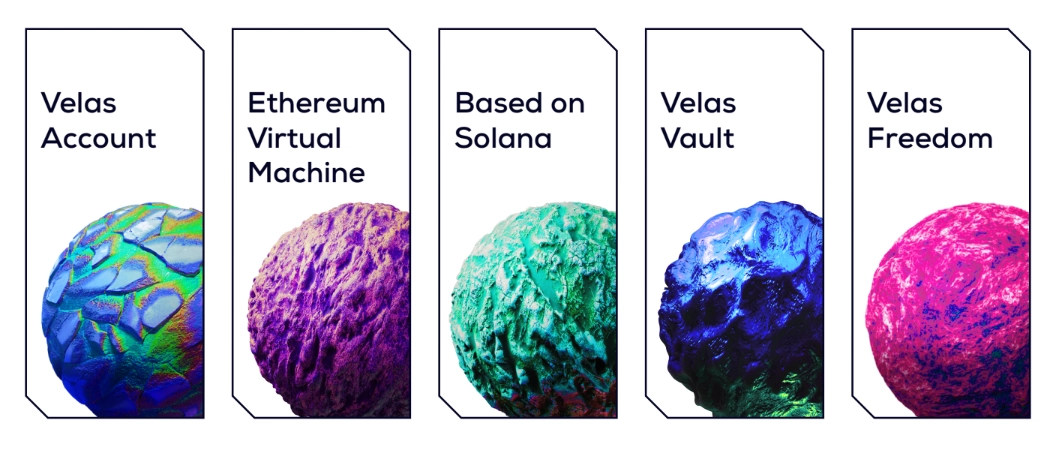
A unified set of technologies listed below has made the Velas Blockchain one of the most scalable, secure, decentralized, and user-friendly blockchain platforms on the market.
1.1. Velas Account
Velas offers its own passwordless authentication system, allowing users to securely access multiple services without needing a password through their personal Velas Account, while implementing unique authorization quotas to minimize risk.
1.2. EVM Compatibility
The predecessor of Solana, Ethereum, developed the concept of developer-friendly smart contracts that support all possible use cases with a focus on decentralizing the mainstream domain and less concern for blockchain limitations. As a result, developers faced high transaction costs and limited network performance on Ethereum, which spurred the creation of the more efficient Ethereum 2.0.
Ethereum remains the most widely used DeFi platform on the market, with the majority of dApps built on its network. Therefore, the EVM bridge enables these applications to run faster and more smoothly by leveraging Velas’s enhanced transactions-per-second (TPS) capabilities.
Velas leverages the most efficient blockchain and implements the ability to write Ethereum smart contracts within it—specifically, the Ethereum Virtual Machine (EVM). This opens the door to the DeFi market and Ethereum-based decentralized application developers, allowing them to expand their capabilities within the Velas ecosystem, which offers a high-speed, low-cost blockchain infrastructure.
1.3. Built on Solana
It is evident that instant transaction confirmation is the most crucial feature for any platform—and Solana has achieved that.
As we all know, to reach consensus and validate a transaction, nodes within the blockchain must exchange information about the network’s state, essentially synchronizing with each other. This synchronization time directly affects the ability to process more transactions per second (TPS). For example, the Bitcoin network has a bandwidth of 7 TPS, EOS supports about 4,000 TPS, while the most commonly used centralized payment system—Visa—processes around 1,700 TPS.
Meanwhile, Solana boasts a throughput of approximately 60,000 TPS and, theoretically, can reach up to 710,000 TPS on a standard gigabyte network.

Current Achievable Performance Metrics:
- Over 50,000 transactions per second
- 400ms block creation time
- $0.00001 per transaction
1.4. Velas Vault
This is a new technology that allows Velas to accelerate and reduce the cost of transactions from other cryptocurrency systems by leveraging the speed and security of the Velas blockchain. Through the Velas Network, users gain access to decentralized services, delegating the security of their passwords, keys, or passphrases to segmentation algorithms and validators focused on data protection. Most importantly, this information is distributed across the network and is ineffective if accessed by any single participant.
In this way, Velas achieves true security for a decentralized custodian. As an added benefit, various authentication solutions—such as Google or Apple Authentication and Velas Accounts—are integrated to make the crypto experience as user-friendly as any digital product we use daily. Furthermore, Velas technology can be applied to store any type of data in a decentralized manner, fully ensuring its privacy.
1.5. The Velas Freedom Experience
Users should not have to pay when centralized applications perform read/write operations to a backend database—and they shouldn’t on-chain either. By building your project on Velas, users may not even realize they’re interacting with blockchain services, as transactions occur entirely in the background.
You still retain the ability to charge users with your project’s tokens—automatically and seamlessly—without disrupting the user experience.
2. HOW IS VELAS NETWORK DIFFERENT?
Inspired by the values of Web 3.0 and blockchain technology, Velas—a project combining blockchain with innovative technologies—has emerged as the foundation for an ecosystem of transparent, secure, fast, community-oriented, and decentralized products and services.
Each Velas service is primarily user-focused, combining the best attributes of both centralized and decentralized solutions. This includes studying modern cryptography, developing consensus protocols, and designing intuitive user interfaces. In doing so, developers, businesses, and users alike can create and participate in accessible, transparent, and community-governed ecosystems for Web 3.0.
To solve blockchain’s core challenges, Velas technologies are being developed with a focus on scalability, security, and decentralization. Currently, the performance of Velas Blockchain significantly surpasses what is observed on most existing blockchain platforms.
To address the issue of scalability, Velas built its solution on Solana while adding extra features and improvements—such as support for Ethereum Virtual Machine (EVM) compatibility.
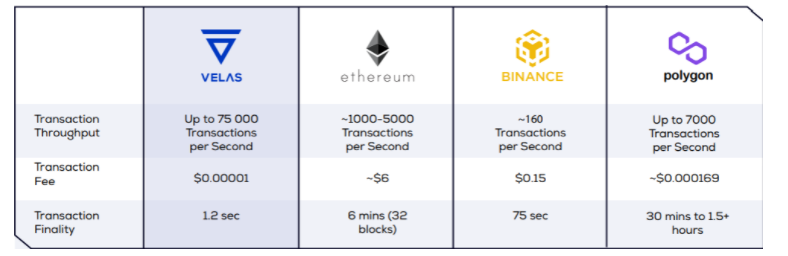
It can be seen in the comparison chart above that Velas expands upon Solana’s codebase to leverage one of the fastest blockchain frameworks in the entire cryptocurrency industry—surpassing previous architectures and outperforming its competitors. As a result, all decentralized applications (dApps) based on Ethereum and decentralized finance (DeFi) protocols can run seamlessly on Velas.
3. WHAT IS THE VLX COIN?
The Velas Token (VLX coin) is the native coin of the Velas blockchain. Velas is built on a Delegated Proof of Stake (DPoS) consensus mechanism, providing participants with optimal conditions to interact and encouraging them to act in the best interest of the network.
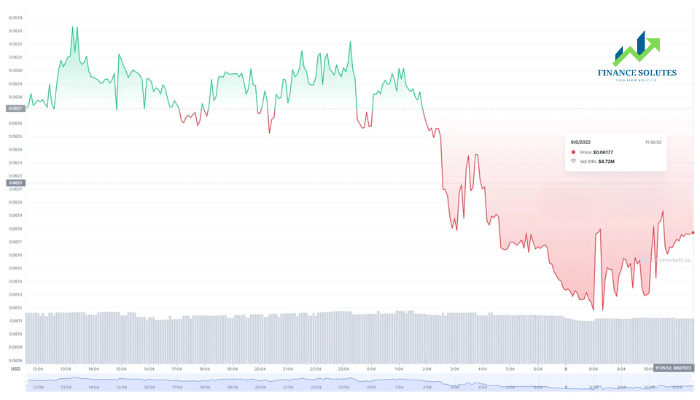
As of June 9, 2022, the price of VLX on CoinMarketCap is $0.061350 with a 24-hour trading volume of $4,755,277.
3.1. Basic Information About VLX Coin
- Token Name: Velas
- Ticker: VLX
- Blockchain: Ethereum, Velas
- Contract: 0x8c543aed163909142695f2d2acd0d55791a9edb9
- Token Type: Utility, Governance
- Total Supply: 2,229,737,314 VLX
- Circulating Supply: 2,223,461,795 VLX
- Inflation Rate: 8% per year
3.2. Use Cases of VLX Coin
VLX Velas Coin is used for the following purposes:
- Transactions, payments, fees, and support for the Proof-of-Stake consensus mechanism.
- Staking: Enables block producers (validators and their delegators) to provide transaction consensus and earn staking rewards for honest block creation. There are two options for staking in the Velas system—creating your own pool and becoming a validator, or joining an existing pool as a delegator. DPoS allows delegators to “vote” for potential validators by staking VLX coins on them, increasing their chance of becoming validators.
- To become a Validator, users must hold at least 1 million VLX coins.
- To become a Delegator, users must hold at least 1 VLX coin.
4. WHO IS THE FOUNDER OF VELAS?
Velas is a Switzerland-based ecosystem startup founded in 2019 by Alex Alexandrov, a renowned entrepreneur and investor in cryptocurrency and blockchain. He is also the founder of CoinPayments—the world’s #1 crypto payment gateway—as well as an advisor and investor in Mind AI, a prominent South Korean AI startup. Alex advises the FBI, Europol, and several government agencies on technology, cybersecurity, blockchain, and AI implementation.
5. WHERE TO BUY VLX COINS?
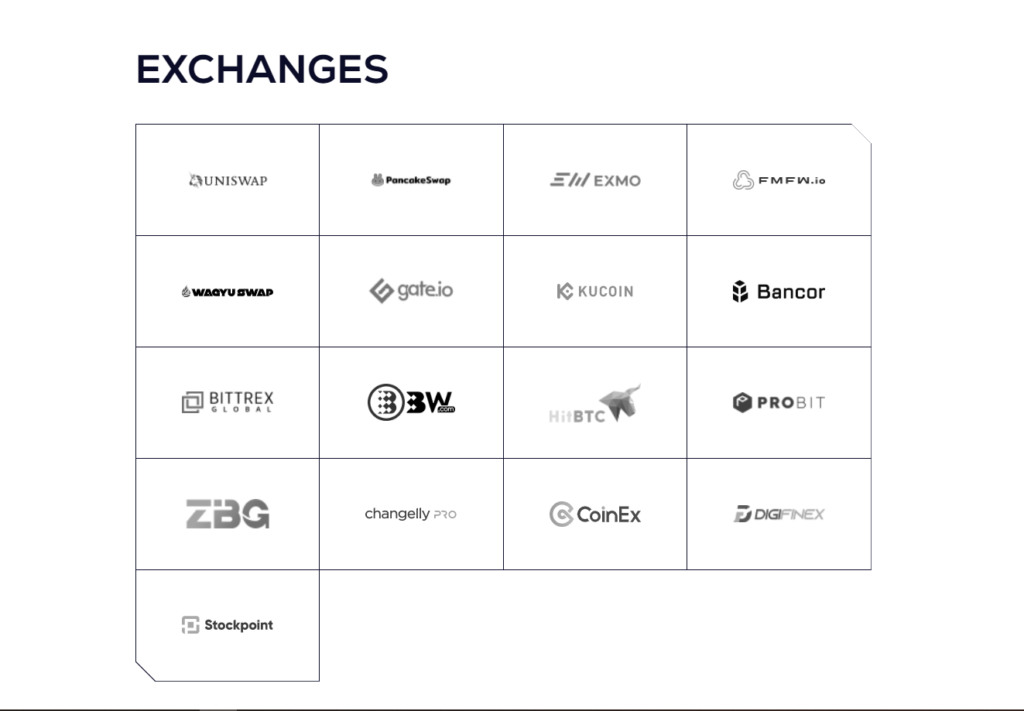
Currently, investors can purchase VLX coins from several exchanges listed officially on the Velas website, including:
6. VLX COIN STORAGE WALLETS
If you want to receive VLX coins on the Velas blockchain, you will first need to create a storage wallet.
Velas supports a number of wallet types, including the native Velas command-line application as well as third-party wallets.
For most users, it’s common to use one of the application-based or browser-based web wallets, as these provide a more familiar user experience without requiring knowledge of command-line tools.
For advanced users or developers, command-line wallets may be more suitable, as new features on the Velas blockchain will always be supported via command line before being integrated into third-party solutions.
7. SUMMARY
The article above by Finance Solutes has provided an in-depth explanation of the following questions: What is Velas? What technology powers Velas Network? How is the VLX coin used? Where can you buy and store VLX coins?
What are your thoughts on this project? Leave a comment below and let Finance Solutes know!
- t.me/finance_solutes
- Website: https://finance-solutes.com
- Hotline: +1 929 5636 439 ( Hotline )
- 26 Broadway, Suite 934, New York, 10004, US
