
 XM
XM Bybit
Bybit Binance
 Robinhood
 Webull
 IC Markets
 Pepperstone
 OKX
OKX Vantage
 VT Markets
 BingX
BingX Gate.io
 Kucoin
 MEXC
MEXC Exness
 Bitget
The Stellar Network was launched in 2014. Since then, it has processed over 2 billion operations carried out by more than 6.5 million individual accounts. Many large businesses and independent startups have chosen Stellar for money transfers and expanding into new markets.
So what is the Stellar network? What are its applications? What is XLM coin? Where can you buy and store XLM coin? Let’s explore this project in more detail with TradaFX below!
1. WHAT IS STELLAR?
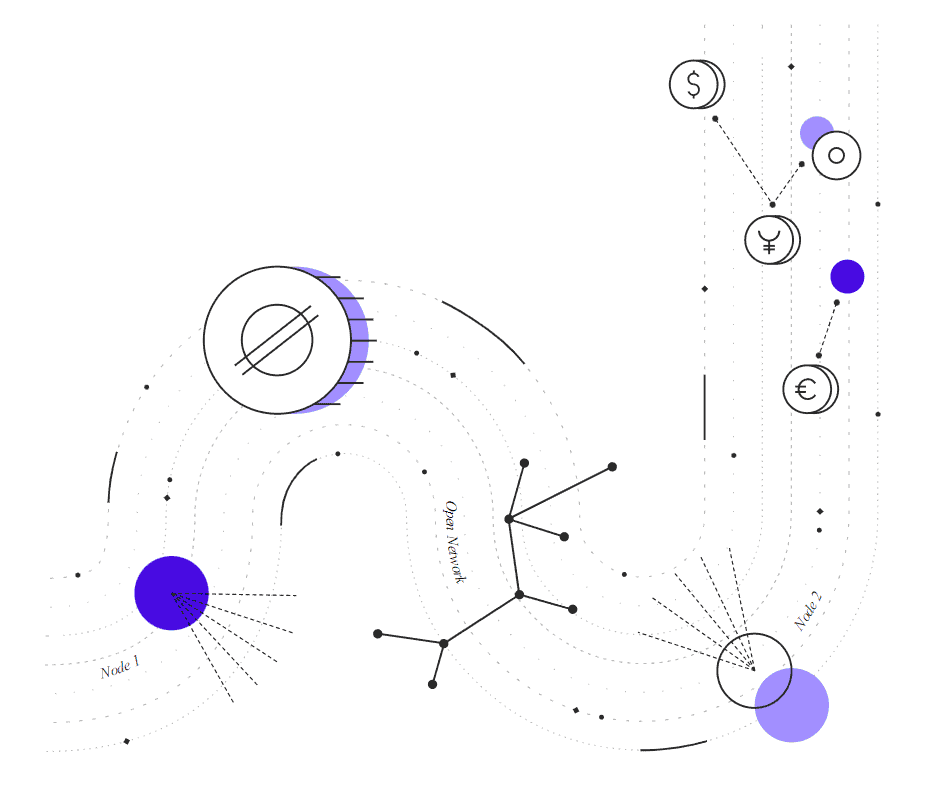
So, what is Stellar? Stellar is an open-source network developed for currencies and payments. Stellar enables you to create, send, and trade digital representations of all kinds of money—dollars, pesos, bitcoin, and more. So what’s the idea behind it? Stellar is designed to allow all the world’s financial systems to work together on a single network.
Stellar has no owner—instead, it belongs to everyone. The software runs across a decentralized, open network and handles millions of transactions each day.
Like Bitcoin and Ethereum, Stellar relies on blockchain to keep the network in sync, but the key difference is that the end-user experience feels more like cash. Stellar enables faster, cheaper, and more energy-efficient transactions than traditional blockchain-based systems.
2. KEY FEATURES OF THE PROJECT
From the beginning, Stellar has been crypto-adjacent, but its software aims to enhance rather than disrupt or replace existing financial systems. Whereas the Bitcoin network was built solely for trading bitcoin, Stellar is a decentralized system excellent for trading any form of money transparently and efficiently.
The Lumen (XLM coin) is the native currency of the Stellar network, used in small amounts for account creation and transaction processing. Aside from these requirements, Stellar doesn’t privilege any particular currency. It is designed specifically to make traditional forms of money—the kinds that people have spent and saved for centuries—more useful and accessible.
For example, here’s what you can do with Stellar:
You can create a digital representation of the US dollar on Stellar, call it a “dollar token”—and let the world know that whenever someone sends you a traditional dollar, you’ll issue one of your new tokens. When someone brings that “dollar token” back to you, you promise to redeem it for one of the actual dollars in your deposit account.
Essentially, you create a 1:1 relationship between your digital token and the traditional dollar. Every token in circulation is backed by an equivalent dollar deposit. So while people hold the tokens, they can treat them just like cash, knowing they can eventually redeem them for traditional money.
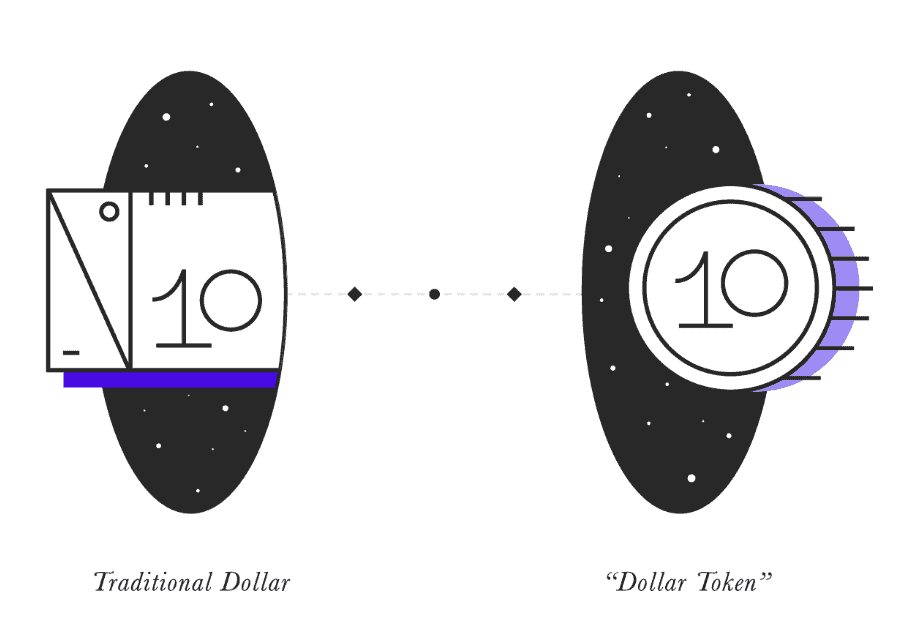
So what’s the big idea behind this? It’s that no matter how the token moves through the economy, the underlying dollars never leave that US bank account.
Let’s say someone lends their tokens to another person, who then uses them to buy a car. No bank has to process the purchase or approve the loan. And importantly, it doesn’t matter if the car seller lives in Mexico, Singapore, or anywhere else—they can still hold the tokens and trade them however they want. The Stellar network makes moving money limitless.
Dollar tokens also mean that people anywhere in the world can hold, buy, and sell dollar value without needing a US bank account. A Venezuelan can hold their family’s net worth in dollars. A Filipino overseas worker can send dollars back home, and the recipient can keep them—safely and digitally—until she’s ready to convert.
A US company can pay a supplier in Mexico in dollars, and the supplier can then pay its vendors in turn—with a five-second wait instead of five days to settle. Because the dollar is represented by a token that never actually moves, these transactions avoid the friction and cost of the traditional banking system.
3. APPLICATIONS OF STELLAR
Stellar is an open, interoperable system for currency and payments. Below, TradaFX will explain some of Stellar’s most powerful features—asset issuance, distributed order books, and path payments—that enhance and simplify any fintech product.
3.1. Asset Issuance
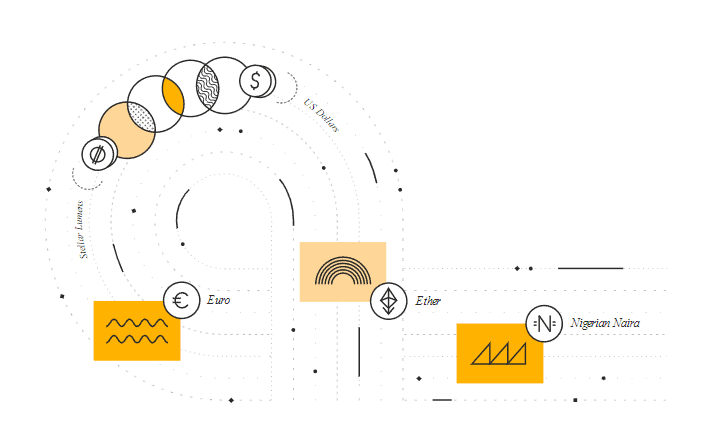
Stellar allows users to create redeemable or tradeable representations of any asset. These are called tokens. The most useful tokens are pegged to fiat currency (representing USD, CNY, or EUR digitally for instant cross-border payments), but in theory, you can issue tokens on Stellar for gold, REIT stocks, or even one hour of your time as a consultant.
In a sense, Stellar provides a general-purpose toolkit for anyone to do what Tether has done for the dollar with USDT or what Coinbase is doing with USDC. Stellar lets you digitize value, then issue and redeem claims on it; the platform was designed for stablecoins before stablecoins were even known.

By default, Stellar tokens can be seen, held, and traded by anyone, but they are highly configurable. If you have specific compliance needs, you can:
- Require token holders to complete your KYC program
- Enforce Reg D ownership requirements for your token
- Control access using multisig accounts
- Create time-locked escrows for any account or asset
These features are built-in at the protocol level. The supporting code is tested and fast. The ability to issue and redeem assets is one of Stellar’s strongest features. It means any type of asset can benefit from Stellar’s global reach, near-instant settlement times, and ultra-low costs.
3.2. Peer-to-Peer Token Trading
Every token on Stellar can be exchanged with any other token on the network, and the Stellar protocol itself connects buyers and sellers. Users can post their bid or ask to the public network with a simple operation, and every few seconds, compatible trades are settled automatically.
There is no middleman arranging trades and no entity acting as a custodian. Simply put, there’s a decentralized exchange (DEX) built into the Stellar ledger system.
Among leading blockchains, Stellar is unique in this respect. The base Stellar protocol not only tracks balances (like Bitcoin or Ethereum) but also tracks and settles trades between those balances in a decentralized, ownerless way.
3.3. Currency Conversion (Path Payments)
Like any payment system, Stellar allows one user to send currency to another. User A can send User B dollar tokens, XLM coins, or anything else. But Stellar also lets the sender send one currency while the recipient receives a different currency.
This is called path payment, a powerful innovation for cross-border payments. For example, a US company can pay an invoice in Mexico using dollar tokens, while the Mexican vendor receives peso tokens. Neither party faces the risk or delay of currency exchange. Both get the currency they want.

Here’s how it works:
- The sender in the US holds dollar tokens and signals they want to send peso tokens to a supplier.
- The network searches the DEX for the best rate.
- It locks in the price and quantity.
- The sender confirms, and the dollar tokens leave their account.
- The transaction is completed, and the recipient receives peso tokens.
The payment is atomic and submitted to the network as a single transaction. No party can get “stuck in the middle” holding a currency they don’t want.
In the above example, neither side manually converts currencies—Stellar automatically finds the best exchange rate. Path payments are Stellar’s core idea of interoperability realized: value flows continuously between accounts in the most useful form.
4. WHAT IS XLM COIN?
Stellar is built to support digital representations of any currency, but it also has its own native token called lumen or XLM coin, created to fulfill a special role in the network. By design, Stellar requires every account to hold a small amount of XLM.
4.1. Basic Information of XLM Coin
- Token Name: Stellar
- Ticker: XLM
- Blockchain: Stellar blockchain
- Consensus: Stellar Consensus Protocol (SCP)
- Type: Utility
- Avg. Block Time: 5 seconds
- Avg. Transaction Speed: Over 1000 TPS
- Token Standard: Updating…
- Contract: Updating…
- Total Supply: 50,001,803,036 XLM
- Circulating Supply: 23,250,000,000 XLM (47/100%)
4.2. XLM Coin Allocation Plan
Unlike other blockchain tokens, XLM coins are not mined or distributed by protocol over time. Instead, 100 billion XLM were created when the Stellar network launched. For its first 5 years, the supply increased at 1% per year by design.
That inflation mechanism ended after a community vote in October 2019. In November 2019, the total XLM supply was reduced. Now, there are about 50 billion XLM coins in existence, and no more will be created.
About 20 billion XLM are in open markets, and the Stellar Development Foundation holds 30 billion XLM to develop and promote Stellar. These will be released gradually into the public market over the coming years.
5. ROADMAP
The 2022 roadmap is structured around three strategic pillars:
- Increase network scalability and innovation, by expanding capacity and enabling low-trust innovation;
- Enable greater participation, through ecosystem involvement and feedback, long-term roadmap shaping, partnerships, tech innovation, marketing, investment, and community activities;
- Promote diversity and inclusion, by conducting necessary research to understand Stellar’s current status, impact, and where to focus next for a more equitable financial system.
6. DEVELOPMENT TEAM
The Stellar development team includes the following members:

7. WHERE TO BUY & STORE XLM COIN?
You need XLM coins to use Stellar. They are sold on many exchanges and are also directly tradable on the Stellar network.
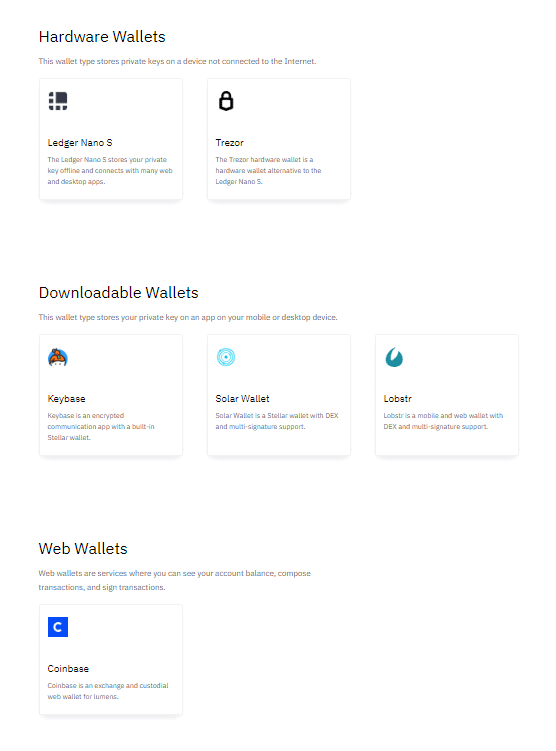
In the U.S., Coinbase and Kraken are options to buy XLM with USD. Stellar’s native exchange Lobstr allows direct XLM purchases on the network.

Note: Digital currencies can be volatile, and purchasing them involves risks. While XLM will always have utility within Stellar, its fiat price can fluctuate, and you may lose significant value.
To store XLM coins and access features like payments and peer-to-peer transfers, you can use a hardware wallet or digital wallet from the options below.
8. SUMMARY
This article by Finance Solutes has summarized the basics of the Stellar project and answered the questions: What is the Stellar Network? What are Stellar’s use cases? What is XLM Coin? Where to buy and store XLM Coin? Stay tuned with Finance Solutes for the latest updates on the cryptocurrency market!
- t.me/finance_solutes
- Website: https://finance-solutes.com
- Hotline: +1 929 5636 439 ( Hotline )
- 26 Broadway, Suite 934, New York, 10004, US
