
 XM
XM Bybit
Bybit Binance
 Robinhood
 Webull
 IC Markets
 Pepperstone
 OKX
OKX Vantage
 VT Markets
 BingX
BingX Gate.io
 Kucoin
 MEXC
MEXC Exness
 Bitget
One of the most prominent blockchain projects during the 2017 ICO wave was Tezos (XTZ), which raised over $230 million USD. The idea behind Tezos is a smart-contract-based blockchain similar to Ethereum, but with the ability to self-evolve and upgrade without requiring a hard fork.
What is Tezos? What are its applications? How is Tezos different? What’s the basic information and use case of XTZ coin? Let’s dive into everything about the Tezos (XTZ) project with Finance Solutes below!
1. WHAT IS TEZOS?
Tezos is an energy-efficient blockchain where developers, artists, entrepreneurs, brands, and individuals from around the world can build and participate in a decentralized network of applications.
Its underlying architecture allows for seamless, community-driven upgrades that continuously push the next wave of innovation.
2. FUNCTIONS OF TEZOS
Some of Tezos’ standout features include:
2.1. Self-Amending Capability
Tezos can upgrade itself without splitting the network into different blockchains. This matters because proposed or expected forks can divide communities, alter stakeholder incentives, and disrupt long-standing network effects. The self-amending feature also reduces coordination costs and enables smooth implementation of protocol upgrades.
2.2. On-Chain Governance
Participants in the Tezos network can vote on proposed protocol upgrades via a formal and systematic voting process. Combining self-amendment and on-chain governance, Tezos can even improve its governance mechanism over time if needed.
2.3. Decentralized Innovation
Tezos allows accepted proposals to include payments to individuals or groups who contribute to improving the protocol. This incentivizes active participation and helps decentralize network maintenance. It also encourages a vibrant and diverse developer ecosystem that fosters adoption and innovation.
2.4. Smart Contracts & Formal Verification
Tezos offers a platform for smart contracts and decentralized applications (dApps) that cannot be censored or shut down by third parties. It also supports formal verification—a mathematical approach to ensuring the security of code (especially smart contracts), potentially helping avoid costly bugs and disputes.
2.5. Proof of Stake (PoS)
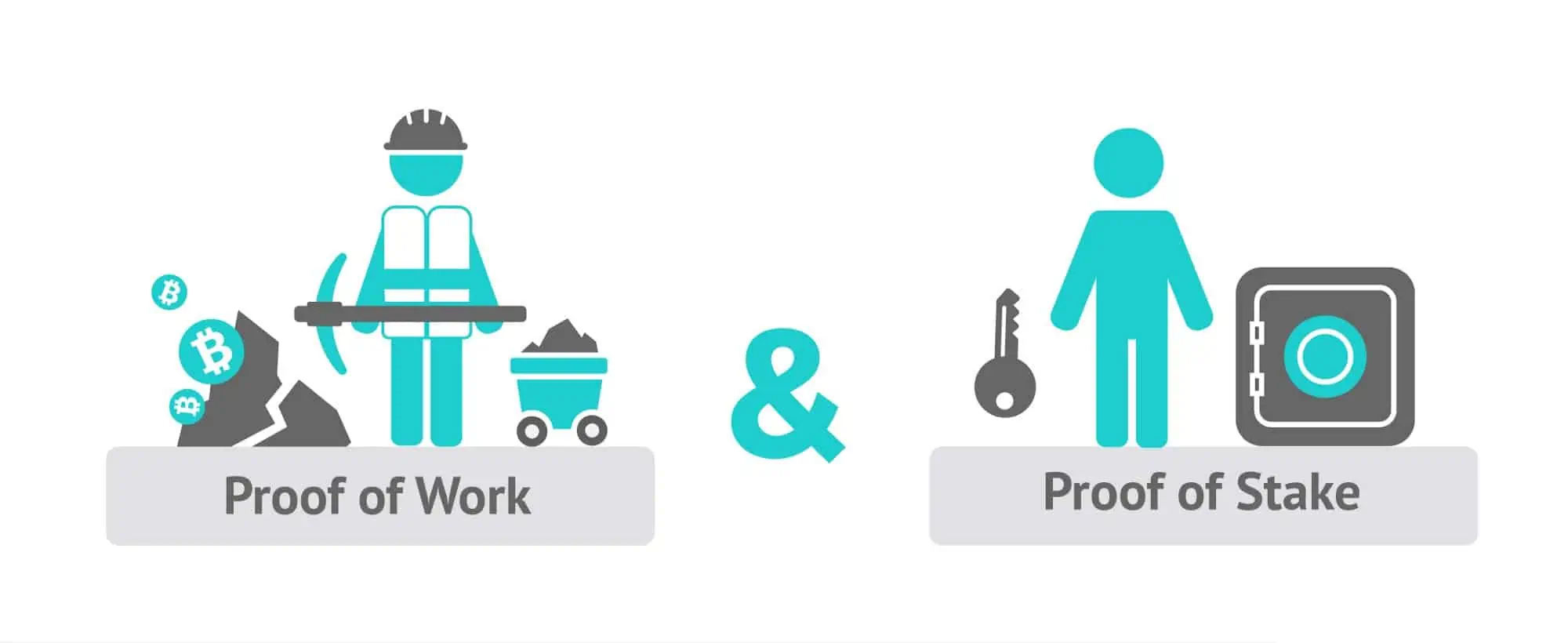
Network participants (nodes) in Tezos provide the computing resources needed to maintain the network. Tezos uses a proof-of-stake consensus mechanism, where anyone can participate in securing the network and receive protocol-level rewards. Compared to other consensus systems, PoS lowers participation costs and reduces entry barriers.
2.6. Delegation
PoS in Tezos requires a security deposit to avoid inflation risks and promote honest behavior. The protocol penalizes dishonest actions and rewards honest ones. Users who don’t wish to participate directly can delegate their staking and voting rights to others.
3. WHAT MAKES TEZOS STAND OUT?
Why is Tezos considered part of the future of the digital world?
3.1. Build
Developers around the globe are using Tezos to build the foundation of a truly decentralized digital future — from groundbreaking applications to innovations in art, finance, identity, ownership, and more.
3.2. Play
Gaming reimagined — Tezos enables a revolution in how we experience classics like trading card games and puzzles. Dive into an expansive ecosystem of unique digital apps, opening up a whole new digital playground.
3.3. Collect
Tezos’ NFT marketplaces have unlocked unprecedented opportunities for creators and collectors. From Formula 1 fans to surrealist art and comics enthusiasts, collectors can now experience their passions in a practical and energy-efficient way.
4. LIQUID PROOF OF STAKE CONSENSUS
In Tezos, a participant must stake at least 8,000 XTZ to qualify as a baker. The PoS mechanism chooses bakers based on total stake to validate the next block. Those without enough XTZ or infrastructure can participate through delegation.
Consensus participants include:
- Bakers: Create new blocks
- Endorsers: Validate and agree on blocks
Baking and endorsement rights are determined each cycle through a random seed derived from on-chain information. Rewards (via inflation or newly minted tokens) are given to encourage participation. This delegation model surpasses traditional PoS, as anyone can freely participate or delegate, reducing technical and infrastructure barriers.
5. WHAT IS XTZ COIN?
Like many blockchain platforms, Tezos has a native token: XTZ. It is used to pay transaction fees, execute smart contracts, and most importantly, play a central role in Tezos’ consensus and governance mechanisms.
5.1. Basic Info
- Token Name: Tezos
- Ticker: XTZ
- Blockchain: Tezoschain
- Token Type: Utility, Governance
- Total Supply: Unlimited
- Circulating Supply: 861,090,080 XTZ
5.2. Token Allocation
Tezos ICO ran from June 28 to July 13, 2017, raising 65,681 BTC and 361,122 ETH. A total of 763,306,929.68 XTZ was distributed as follows:
- 79.59% – ICO Participants
- 0.41% – Early supporters and contractors
- 10% – Tezos Foundation
- 10% – Dynamic Ledger Solutions (DLS)

5.3. Use Cases
- Payment: Pay transaction fees and execute smart contracts
- Staking: Users can deposit XTZ coins directly on the network to participate in validating transactions and blocks. All tokens deposited on the platform receive rewards in the form of new XTZ coins distributed in proportion to the amount of deposited tokens.
- Governance: Securitization also gives users proportional voting power in Tezos, allowing planners to help determine the future direction of the protocol. XTZ coin holders who do not have the resources and technical ability to stake directly can delegate their voting power to other bakers. This model allows any token holder to participate in Tezos’ on-chain governance system.
6. WHERE TO BUY XTZ?
You can buy XTZ from major exchanges such as Binance, Coinbase, and others.
7. XTZ WALLETS
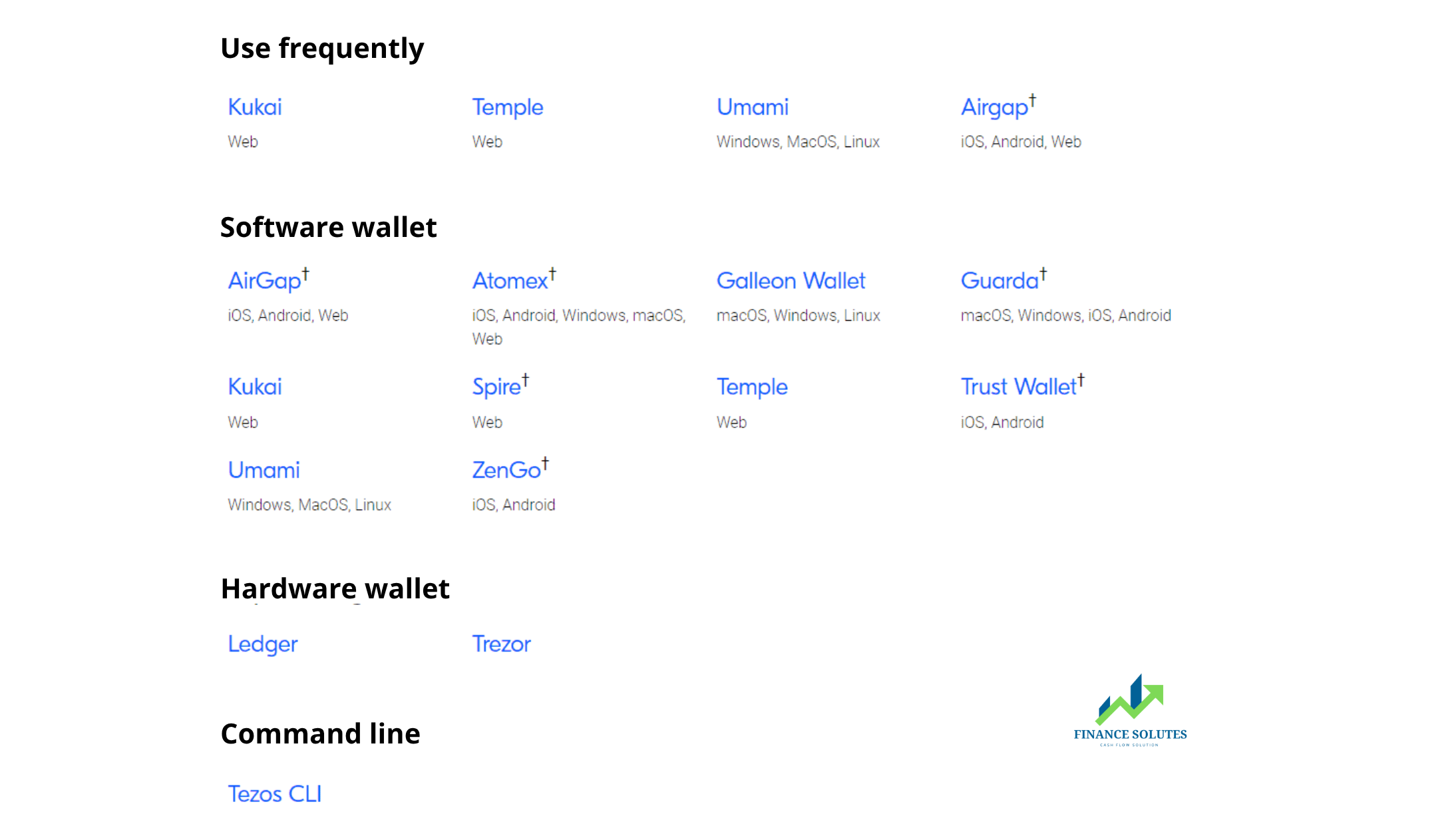
To interact with the Tezos blockchain, you need to own XTZ. So where can XTZ holders store their tokens?
Here are some wallets recommended by Finance Solutes that have undergone independent security audits:
8. ROADMAP
- June 2018 – Testnet Launch
- July 2018 – Public Baking Launch
- September 2018 – Mainnet Launch
- May 2019 – On-chain upgrade: Athens
- October 2019 – On-chain upgrade: Babylon 2.0 / 2.0.1
- March 2020 – On-chain upgrade: Carthage 2.0
9. DEVELOPMENT TEAM
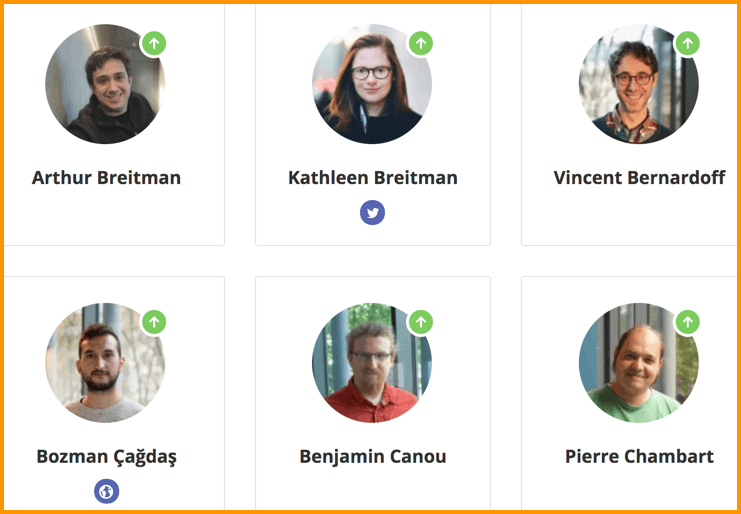
Arthur Breitman, founder of Tezos and creator of its on-chain governance model, first introduced Tezos in an August 2014 position paper. He published a detailed whitepaper in September 2014 under the pseudonym “L. M. Goodman,” reminiscent of Bitcoin’s creator Satoshi Nakamoto.
Breitman believed Bitcoin’s design lacked comprehensive governance and flexibility for token creation. Together with his wife Kathleen, they developed Tezos as a smart contract and token issuance platform with on-chain governance, allowing XTZ holders to vote on protocol upgrades to avoid hard forks.
In 2015, they formed Dynamic Ledger Solutions (DLS) to develop Tezos’ codebase. The alpha version launched in February 2017, followed by a token sale later that year.
10. SUMMARY
This Finance Solutes article has covered everything about Tezos—from what it is, how it works, what makes it unique, to its governance and coin utilities.
What do you think about the Tezos project? Drop a comment below and share your thoughts with the Finance Solutes community!
- t.me/finance_solutes
- Website: https://finance-solutes.com
- Hotline: +1 929 5636 439 ( Hotline )
- 26 Broadway, Suite 934, New York, 10004, US
