
 XM
XM Bybit
Bybit Binance
 Robinhood
 Webull
 IC Markets
 Pepperstone
 OKX
OKX Vantage
 VT Markets
 BingX
BingX Gate.io
 Kucoin
 MEXC
MEXC Exness
 Bitget
Interactive Brokers (IBKR) has long been the titan of global electronic trading, and as we move into 2026, its position as a fintech pioneer is more prominent than ever. For sophisticated traders, quant developers, and institutional investors, IBKR represents the gold standard in market access, offering a gateway to over 150 markets across 33 countries. However, the complexity of its professional-grade tools—ranging from the legendary Trader Workstation (TWS) to its advanced Python APIs—can be daunting for those unaccustomed to such high-level infrastructure. In this authoritative guide from Finance-Solutes.com, we break down the core strengths of Interactive Brokers, analyze its current financial standing, and explore how artificial intelligence is reshaping its trading environment, ensuring you have the strategic clarity to master this powerhouse platform in the years ahead.
1. Company Overview: Interactive Brokers in 2026
By 2026, Interactive Brokers has solidified its reputation by offering the most diverse range of asset classes in the industry. The platform provides seamless access to global equities, futures, options, forex, and fixed income. Unlike many retail-focused brokers that limit their scope to domestic markets, IBKR enables users to trade on major exchanges such as the NYSE, LSE, HKEX, and XETRA from a single integrated account. This global reach is coupled with an ultra-low commission structure that appeals to both high-frequency systematic traders and long-term value investors.
The company’s commitment to technology-driven efficiency is reflected in its operational margins. IBKR consistently reports compensation expenses as a percentage of net revenue at levels significantly lower than its peers—often below 18%. This lean operational model allows the firm to reinvest in its core technology, providing clients with superior execution quality and price improvement. For the digital entrepreneurs and quants at Finance-Solutes.com, this efficiency translates directly into lower overhead and better performance for automated trading strategies.
Global Reach and Asset Diversity
The asset universe at IBKR is unparalleled. Investors can hedge currency risks with access to over 20 global currencies or diversify into structured products and precious metals. As crypto-assets become more integrated into traditional finance, IBKR has expanded its cryptocurrency offerings through regulated partnerships, allowing clients to manage digital assets alongside traditional stocks and bonds. This holistic approach to portfolio management ensures that investors can pivot quickly as global market trends shift.
Furthermore, IBKR’s institutional-grade infrastructure serves a wide client base, including hedge funds, family offices, and introducing brokers. The platform’s ability to handle complex multi-asset portfolios with high-speed execution makes it the preferred choice for those who require more than just a simple mobile app. Whether you are trading ADRs in the US or small-cap stocks in Singapore, Interactive Brokers provides the depth of market data required for professional-level due diligence.
Client Growth and Performance Metrics
The growth trajectory of IBKR is a testament to its reliability. Publicly reported metrics indicate a steady climb in total accounts, surpassing the 5 million mark in early 2026. This growth is not just in quantity but in quality; the revenue per account has seen a consistent upward trend, signaling that the platform is attracting more sophisticated, high-net-worth clients who utilize its advanced margin and borrowing capabilities.
| Year | Total Accounts (M) | YoY Growth (%) | Revenue per Account ($) |
|---|---|---|---|
| 2024 | 3.53 | 25% | 157 |
| 2025 | 4.18 | 18% | 165 |
| 2026 (Est) | 5.09 | 22% | 170 |
2. Key Platform Features and Technological Advancements
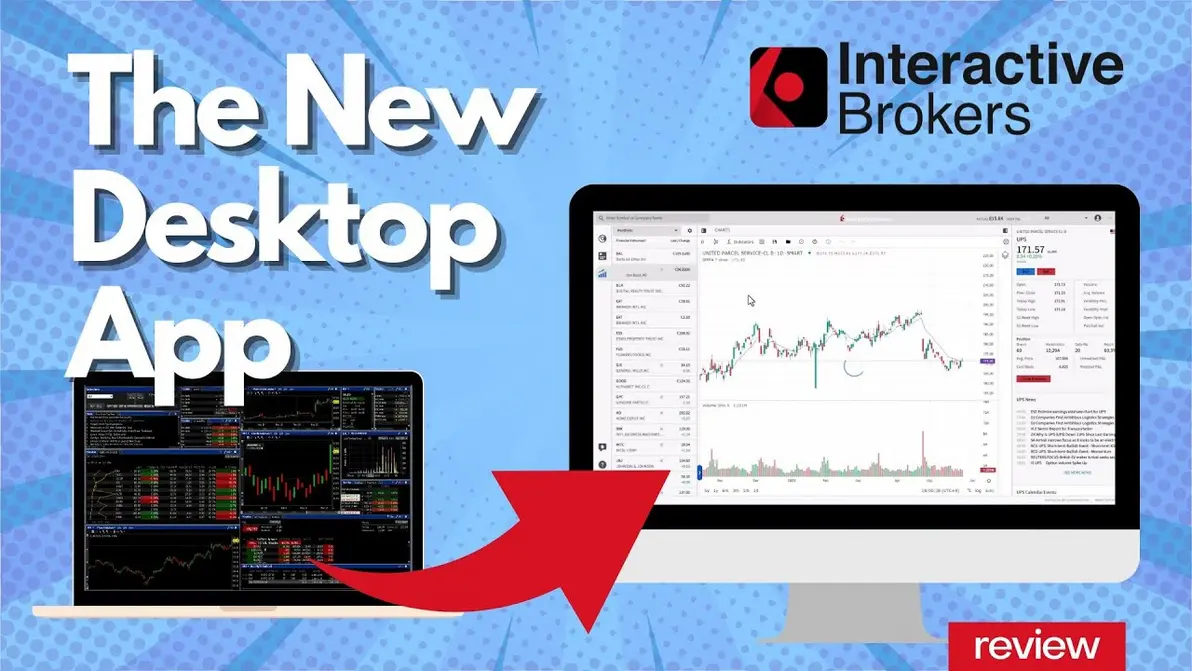
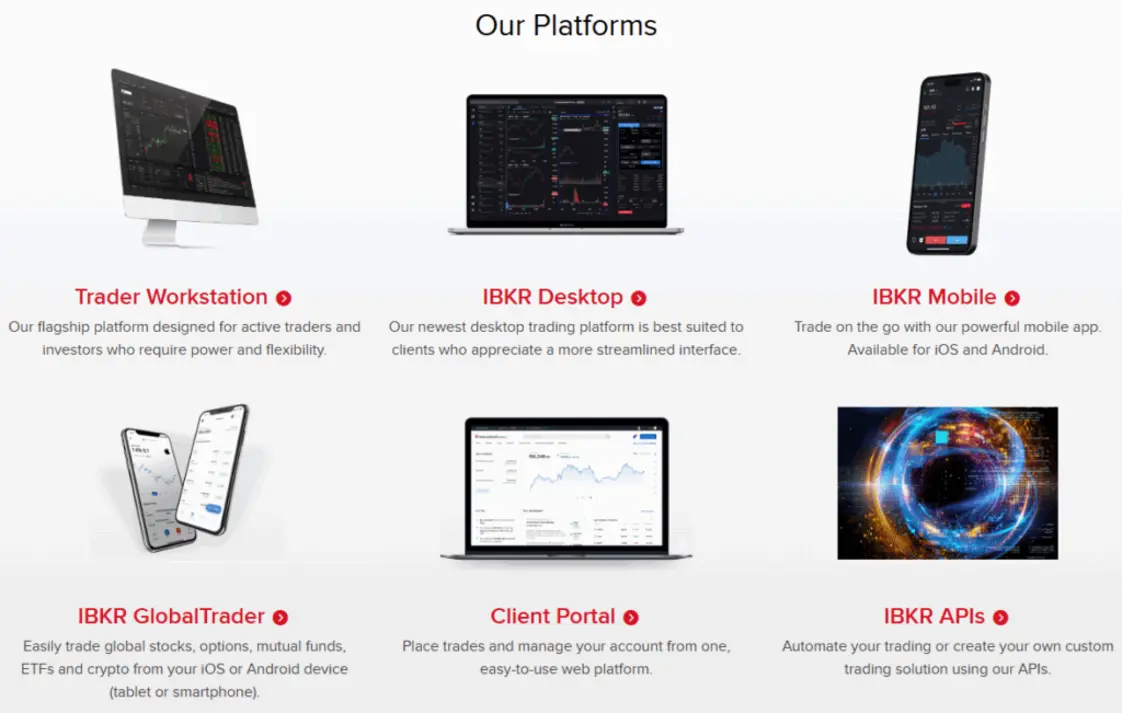
The technological ecosystem of Interactive Brokers is designed for performance and modularity. The 2024 launch of the next-generation IBKR Desktop platform introduced a refreshed UI with modular workspaces, allowing users to customize their dashboard with API plug-ins and enhanced analytics. While the classic Trader Workstation (TWS) remains the powerhouse for professional traders due to its real-time risk monitoring and scripting support, the new desktop version bridges the gap for those who want a more modern, intuitive experience without sacrificing execution speed.
Mobile trading has also seen significant upgrades. IBKR Mobile now supports robust execution for on-the-go traders, though we at Finance-Solutes.com still recommend the desktop suite for complex quantitative analysis. The integration between these platforms is seamless; a trade initiated on a smartphone can be managed or automated via the Python API on a server, ensuring that the professional investor is never disconnected from their strategy, regardless of their location.
Trading Tools: APIs and Algorithmic Trading
The Interactive Brokers Python API is the lifeblood of modern algorithmic trading. In 2026, the API has seen major updates, including new endpoints for AI/ML integration and increased data throughput. Quants use these tools to pull 20+ years of historical tick data, build predictive models, and execute complex orders such as TWAP (Time-Weighted Average Price) and VWAP (Volume-Weighted Average Price) to minimize market impact.
Beyond simple execution, the API allows for fully automated portfolio rebalancing and real-time risk constraints. For example, a fund manager can deploy an overnight rotation strategy that automatically shifts equity positions based on momentum signals, all without human intervention. The open-source nature of the IBKR Python SDK makes it accessible for both seasoned coders and fintech developers looking to build custom proprietary trading applications.
Advanced Order Types for Risk Management
Risk management is where IBKR truly shines, offering over 60 different order types. Standard “Stop-Loss” orders are just the beginning; the platform supports Bracket Orders, which automatically set both profit-taking and loss-mitigation targets the moment a trade is executed. For volatile markets, the “Adaptive Algo” A/B tests different market conditions to find the optimal fill price, a feature that significantly reduces slippage for large orders.
We also emphasize the use of Conditional OCO (Order Cancels Other) and LIT (Limit-If-Touched) orders. These are critical for mean reversion or breakout strategies. By using these advanced logic gates, traders can ensure their orders are only active when specific market conditions are met. Finance-Solutes.com experts always advise testing these complex order sequences in IBKR’s Paper Trading environment before deploying them in live markets.
3. AI Trading, Quant Strategies, and 2026 Market Trends
The integration of Artificial Intelligence into the IBKR ecosystem is the defining trend of 2026. Generative AI and Large Language Models (LLMs) are being used to synthesize news, filings, and sentiment data to generate alpha signals. Quants are now using IBKR’s Python API to bridge their ML toolkits directly with the market, allowing for predictive modeling that identifies mean-reversion opportunities in commodities like Gold and Silver with unprecedented accuracy.
AI-driven factor models are also being used to anticipate earnings “beats” or “misses” by analyzing thousands of data points in real-time. This level of analytics, once reserved for the world’s largest hedge funds, is now available to any IBKR user with the technical skill to implement it. From LSTM-based neural nets for Bitcoin execution to sentiment-scorecard equity rotation, AI is shifting the trading landscape from reactive to predictive.
2026 Market Outlook: Sector Performance
As we look toward the remainder of 2026, certain sectors are showing strong technological leadership. The Technology sector continues to lead with an estimated 17.8% EPS growth, driven by the massive expansion of AI infrastructure and cloud computing. Meanwhile, the Healthcare and Communications sectors are benefiting from medtech innovations and AI-driven productivity gains, respectively.
| Sector | 2026E EPS Change (%) | Key Drivers |
|---|---|---|
| Technology | +17.8% | AI, Chips, Cloud |
| Healthcare | +9.2% | Biotech, Medtech |
| Financials | +8.7% | Private Equity, Rates |
4. PortfolioAnalyst: Advanced Reporting and Compliance
Monitoring performance is as important as the trade itself. The PortfolioAnalyst tool has been upgraded for 2026 to include ESG scoring integration and real-time risk dashboards. Users can now conduct forward-looking stress tests on their portfolios, simulating how their assets would react to a sudden interest rate hike or a geopolitical shock. This transparency is essential for meeting the increasingly stringent regulatory reporting requirements of 2026.
For those with diversified interests, PortfolioAnalyst can consolidate data from external portfolios, providing a single source of truth for your net worth. Whether you are tracking crypto, private equity, or traditional stocks, the timeline view allows you to trace every dividend, split, and transaction. We recommend automating these reports monthly to ensure you stay aligned with your long-term financial goals and tax obligations.
5. Risks and Specific Tips for Success
While Interactive Brokers provides powerful tools, investors must be aware of market structure risks. Microstructure fragmentation and “shadow banking” platforms can impact liquidity in ways that traditional charts might not show. Furthermore, the 2026 US midterm elections and shifts in monetary policy by central banks are expected to fuel volatility. In such an environment, active risk calibration is not optional—it is a requirement.
To succeed, we recommend a few best practices: always keep a separate “Paper Trading” account to vet new Python scripts, and leverage “Trailing Stops” to lock in profits during volatile sector rotations. Additionally, the use of “Traders’ Insight,” IBKR’s macro content hub, provides valuable commentary from leading economists that can help you contextualize market movements beyond the raw numbers.
Conclusion
In conclusion, Interactive Brokers remains an essential hub for the new generation of quantitative and AI-powered finance professionals. By embracing its advanced order types, mastering the Python API, and utilizing the deep reporting of PortfolioAnalyst, you can transform the market’s inherent volatility into a measurable advantage.
As we navigate the complexities of 2026—from AI disruptions to shifting economic indicators—having a broker that prioritizes global access and technological innovation is your greatest asset. At Finance-Solutes.com, we are dedicated to providing you with the insights needed to master these platforms. Stay informed, stay systematic, and let the technology work for you.
WATCH MORE
- What is Perfect Money Wallet? The Complete Guide for Beginners
- What is a Node? The Essential Guide to Blockchain Nodes
- What Is CoinGecko? The Ultimate Guide to Crypto Data Tracking
- What is Cloud Mining? A Professional Guide to Remote Crypto Mining
- t.me/finance_solutes
- Website: https://finance-solutes.com
- Hotline: +1 929 5636 439 ( Hotline )
- 26 Broadway, Suite 934, New York, 10004, US
