
 XM
XM Bybit
Bybit Binance
 Robinhood
 Webull
 IC Markets
 Pepperstone
 OKX
OKX Vantage
 VT Markets
 BingX
BingX Gate.io
 Kucoin
 MEXC
MEXC Exness
 Bitget
Notes When Participating in Forex – Just like any journey in life, there are good times and bad times, often marked by success or failure. Usually, the damage we endure becomes our experience. It allows us to evaluate what we did right and what we did wrong. This process helps us improve ourselves in the pursuits we follow.
But this opportunity is not always evident at a specific moment—especially when money is involved, as in the foreign exchange market. In fact, sometimes it takes days or even weeks to recognize a loss as a learning opportunity. But regardless of how long it takes to realize it, the opportunity to learn is always there.
The inspiration for this article came as I was helping several new members who just entered the market. I realized that most of what I know now about forex trading is second nature. And most of what I do during a trading day is also instinctive to me. Of course, it wasn’t always like this.
That realization made me think about the things I wish I had known when I first started trading forex. That’s how I came up with the list below.
1. NOTES WHEN PARTICIPATING IN FOREX
1.1. Forex Trading Is Not a Shortcut to Instant Wealth
Contrary to what you might have read on many websites, forex trading will not turn your $10,000 account into $1 million overnight. No matter how good your strategy is, the actual amount you earn depends on how much you’re willing to risk. The saying “It takes money to make money” holds especially true in forex trading.
But that doesn’t mean your strategy isn’t valuable. Many successful forex traders have chosen to make a living through trading. The difference is that they grew gradually over time and scaled their accounts to generate sustainable income.
I often hear traders targeting 50%, 60%, or even 100% returns annually—or even monthly. But the risk they’re willing to take corresponds to the returns they aim for. In other words, while aiming for a 60% annual return, it’s not unreasonable for your account to experience a 60% loss in any given year.
“But I trade with an edge, so I won’t risk as much as I aim to gain.” That’s the right mindset—if your trades are profitable. Your expected profit should be positive. But without leverage, it’s only a relatively small amount. And in unlucky times, we can still lose. When leverage is involved, traders may generate huge profits but also face the risk of unexpected losses. Leverage can be beneficial at one moment and destructive the next.
1.2. Price Action Is All You Need
Another note when participating in forex is about the charts I used when I first started—they were a mess. There’s no better way to describe them. At any given time, I had a random combination of at least five indicators cluttering my chart. The setup changed weekly.
Sound familiar?
I believed the “aha moment” would come once I found the perfect set of indicators. But instead of “aha,” I had many moments of frustration and despair.
That moment didn’t come until I did something unthinkable: I removed all indicators from my charts. MACD, Stochastics, RSI—all gone! That’s when clarity came. Six months later, I was consistently profitable as a forex trader.
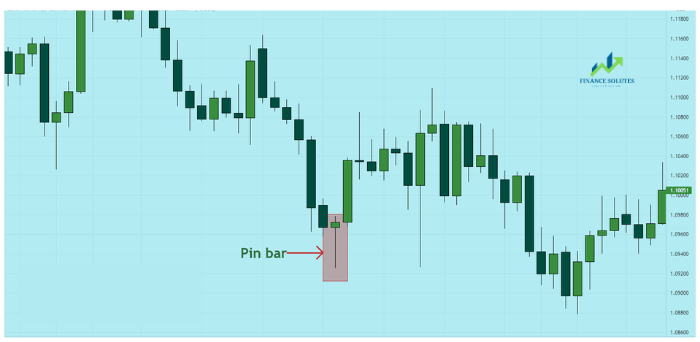
Was it a coincidence? Maybe.
But that moment was in 2010, and I’ve been profitable ever since. That’s not a coincidence.
1.3. The Daily Time Frame Is Not for High-Frequency Traders
In the early days, I traded on the 15-minute, 30-minute, and 1-hour timeframes. My preferences kept changing. At that time, I really didn’t know what I was looking for—aside from profits.
I didn’t consider higher timeframes because I didn’t know they were better. I used shorter timeframes for three reasons—all of which were false:
- Lower timeframes provide more trade setups, hence more profits.
- Higher timeframes are only for traders with large accounts.
- If I had a larger account, higher timeframes would be boring.
Of course, I later realized all three assumptions were far from the truth.
Lower time frames are great. But they can also eat away at your trading account. However, there are certainly forex traders who have found success with them. But in my experience, more traders have found success after switching from lower time frames to higher time frames than they have otherwise.
With micro and mini lot sizes available, higher timeframes are suitable for anyone—even those starting with a $100 account.
When it comes to boredom, higher timeframes are only boring if your mind is always focused on making profits. Personally, I’ve come to love them.
1.4. Spend 90% of Your Time Learning to Identify Support and Resistance
From a technical perspective, your number one priority should be mastering how to identify support and resistance levels.
If you focus on this now, your trading will significantly improve in the coming weeks or months.
1.5. You Need Patience
This is something I completely underestimated in my early trading days. I heard all the “experts” preach the importance of patience, but I ignored them and continued trading impatiently.
I’m here to tell you—if you really want to become a successful forex trader, you must learn patience. Read books, attend seminars, do whatever it takes to develop patience. Once you do, you’ll never trade the same way again.
Stop chasing trade setups—let them come to you. This is essential to developing patience.
1.6. Risk:Reward Ratio Should Never Be Left to Chance
If I gave you a choice between two investments, the first involved risking $100 for the potential to earn $100; the second involved risking $100 for the potential to earn $300. Which would you choose? Note that the possible outcomes of both investments are equal

I hope you chose the second one. That’s the power of a favorable risk:reward ratio. With patience, you can often find setups offering a 1:4 ratio—or better.
Thinking in these terms will change how you evaluate trades—and make you a better trader. But don’t leave it to chance. If you want to succeed, give yourself an edge. Risk no more than half of your potential reward. That’s a great way to start trading.
1.7. Leverage Is a High-Risk Strategy
Overused leverage can ruin an otherwise profitable strategy.
Suppose I had a coin that, if it came up heads, would win you $2, but if it came up tails, it would lose you $1. Would you flip that coin? I bet you would. When you have a 50/50 chance of winning $2 or losing $1, you would take that chance without hesitation.
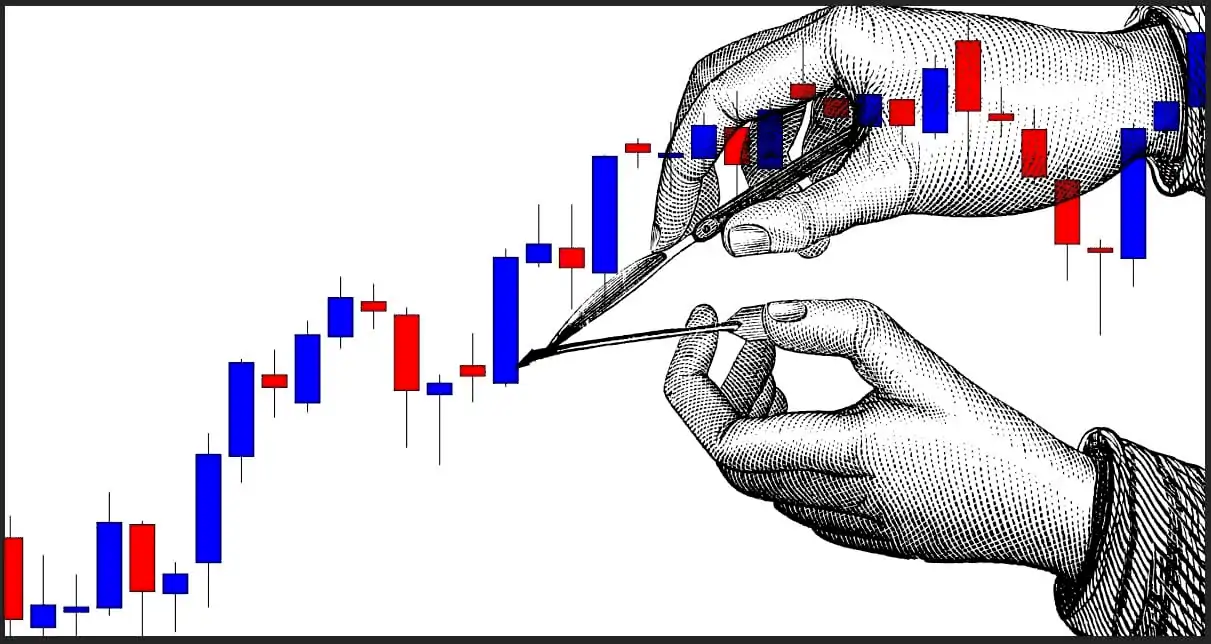
Now suppose I had the same coin, but this time if it came up heads, you would triple your net worth. But if it came up tails, you would lose everything you had. Would you be willing to flip the coin again? I guess you wouldn’t. Because one head means you’re broke. Even though the odds of winning in this example are exactly the same as the previous example, no one would be willing to participate.
The second example shows us how traders perceive their accounts. They decide to go all in and end up losing their entire accounts. Even if their trades are in their favor like the coin flip example above. Just one or two unlucky trades can wipe out their trade completely. This is how leverage can turn a profitable strategy into a loss.
So how do we fix this? A good start is to use no more than 10x effective leverage.
1.8. Wait for a Clear Market Trend
It took me a long time to figure this out. When I first started, I thought big profits only came from jumping into big moves early.
While there’s some truth in that, no trader can know if a reversal is real until it happens. The market confirms trends by breaking key support/resistance or forming clear price action at those levels.
Ultimately, you need to know which direction the market favors before entering any trade.
1.9. A Breakout Without a Retest Will Cost You
Most new traders love using pending orders during breakouts. But you must be alert to the risk of false breakouts.
The best way to trade breakouts is to wait for confirmation and a retest of the broken level as new support/resistance. This two-step approach gives you more confidence in the trade—and helps avoid false breakout traps.
I took a while to learn this, as it requires patience. But if you trade breakouts, I highly recommend giving this method a try. It’s worth the wait.
1.10. Quality Always Beats Quantity
This is true in most areas of life. However, take sports as an example. As a soccer player, the general rule is that the more shots you take, the more likely you are to score.

Forex trading is the exact opposite. In the forex market, less is more. This means that the less you trade, the more opportunities you have to make a profit. This is one of the reasons why becoming a successful forex trader will be one of the most difficult challenges of your life.
Making fewer trades to make more money goes against human nature. But doing so will show you the importance of always prioritizing quality over quantity.
1.11. You Don’t Need to Know What Happens Next to Profit
If someone asked, “Do you think you need to know what happens next in the market to make money as a trader?”—how would you answer?
When I started trading, I would’ve said, “Yes.” At least you need a solid idea of what comes next to earn consistent profits.
But in reality, you don’t need to know what’s next. Just stack the odds in your favor with a good risk:reward ratio—and let the market do the rest.
If you convince yourself you must know—or worse, that you do know what happens next—your ego will destroy your trades. Step back and understand that you don’t have to beat the market to win consistently.
1.12. Successful Forex Trading Is a Process, Not a Project
Before joining the forex market—Finance Solutes wants to end this article with the most important discovery to date. Becoming a successful trader is a process, not a project. In other words, it has no end date. Because you will always be growing as a trader.
2. SUMMARY
Above are the most important notes for traders before entering the forex market. The journey each trader takes as a forex trader is full of challenges. So when you sit in front of your screen after a loss and feel hopeless—know that it’s part of the process.
By viewing trading as a process, you can start your journey as a learning experience. Once you focus more on the process than profits, you’ll see trading from an entirely new perspective.
The stress and anxiety you used to feel will begin to fade. The frustration from losing trades will be cut in half. But the best part of focusing on the process? Steady profits as the reward for your efforts.
Wishing you success in your trading career!!!
- t.me/finance_solutes
- Website: https://finance-solutes.com
- Hotline: +1 929 5636 439 ( Hotline )
- 26 Broadway, Suite 934, New York, 10004, US
