
 XM
XM Bybit
Bybit Binance
 Robinhood
 Webull
 IC Markets
 Pepperstone
 OKX
OKX Vantage
 VT Markets
 BingX
BingX Gate.io
 Kucoin
 MEXC
MEXC Exness
 Bitget
What is Equity? Differentiating Between Equity and Balance
Equity represents the current value of your trading account, reflecting its real-time value and even the smallest price fluctuations. For those working in the financial sector, especially investors, the term “equity” is likely familiar. But what exactly is equity? Does its meaning remain consistent across all financial markets?
This article will answer these questions.
1. What is Equity?
In finance, equity is defined as owner’s equity. It represents ownership of assets, which may come with associated debts or obligations tied to those assets.
The term “equity” in English originally referred to a form of ownership governed by the Equity Law system developed in England during the late Middle Ages. This system was created to meet the increasing demands of commercial transactions. While Common Law courts handled issues related to property ownership, Equity Law courts addressed the rights associated with asset contracts. A single asset could have:
- A contractual owner with rights under a contract.
- A legal owner with permanent ownership rights, unless otherwise stated in a contract.
Owner’s equity can be either positive or negative.
- When assets exceed liabilities, equity is positive.
- Conversely, if liabilities outweigh assets, equity becomes negative.

1.1. What is Equity in Accounting?
In accounting, equity is defined as owner’s equity—the net value of assets after subtracting total liabilities. This is also referred to as Owner’s Equity or Stockholder’s Equity in English. It is a key metric reported at the bottom of the balance sheet.
Investors often rely on equity figures to evaluate a company’s financial health.
Formula: Equity=Total Assets−Total Liabilities
| Code | EQUITY | Explanation | End of Year | Beginning of Year (Restated) |
|---|---|---|---|---|
| 400 | D. EQUITY | 120,588,589 | 99,166,714 | |
| 410 | I. Owners’ Equity | 29 | 120,588,589 | 99,166,714 |
| 411 | 1. Issued Share Capital | 34,309,140 | 32,756,212 | |
| 411a | – Common shares with voting rights | 33,685,755 | 31,916,212 | |
| 411b | – Preferred shares | 623,385 | 840,000 | |
| 412 | 2. Share Premium | 33,996,368 | 11,442,901 | |
| 414 | 3. Other Capital of Owners | 7,235,206 | 7,235,206 | |
| 415 | 4. Treasury Shares | (2,284,059) | (2,974,924) | |
| 417 | 5. Exchange Rate Differences | (11,784) | ||
| 420 | 6. Other Funds of Owners’ Equity | 52,845 | 42,845 | |
| 421 | 7. Retained Earnings | |||
| 421a | – Retained earnings to the end of previous year | 3,119,758 | 5,143,008 | |
| 421b | – (Loss) retained earnings this year | 5,135,161 | 38,952 | |
| 429 | 8. Non-controlling Interests | (2,015,403) | 5,104,056 | |
| Total | 120,588,589 | 99,166,714 |
In Case of Acquisition
In the context of acquisitions, owner’s equity (equity) equals the company’s value minus any debts that will not be transferred as part of the sale.
1.2. What is Equity in Forex?
In Forex trading, equity refers to the account balance, representing the current value of your trading account. It reflects the present value of the account, including even the smallest price fluctuations displayed on your trading platform.
Forex equity is calculated as the total initial account balance plus all unrealized profits or losses (floating P&L) from your open positions. As your trades gain or lose value, your equity fluctuates accordingly.
Formula:
\text{Equity} = \text{Account Balance} + \text{Floating P&L (Unrealized Gains/Losses)}
2. Types of Equity
The composition of equity varies depending on the type of company. These components are usually listed on the balance sheet for easy reference.
2.1. What is Owner’s Equity? What is Additional Paid-in Capital?
Owner’s Equity is the contributed capital of the business owner(s). It represents the capital invested by shareholders or owners.
Companies can raise owner’s equity by issuing bonds or stocks. Owner’s equity consists of two main components:
- Contributed Capital: The capital shareholders or owners invest in the company.
- Additional Paid-in Capital (APIC): The surplus received over the par value of issued shares.
Owner’s equity differs from market capitalization.
- Market capitalization is the total value required to purchase all shares of a company.
- Owner’s equity refers to the net assets contributed by owners or shareholders based on initial company regulations.

Additional Paid-in Capital (APIC)
APIC represents the difference between the issuance price of shares and their par value. In some cases, this surplus can be significant, making APIC the dominant component of the owner’s equity.
2.2. Retained Earnings
Retained earnings reflect a company’s accumulated profits or losses after taxes that have not been allocated or distributed. These earnings remain in the account and are cumulative.
- Companies experiencing prolonged losses or accumulated losses exceeding charter capital may face delisting risks.
3. Formulas for Calculating Equity
3.1. Equity Calculation in Accounting
The formula for calculating owner’s equity is:
Equity=Total Assets−Total Liabilities\text{Equity} = \text{Total Assets} – \text{Total Liabilities}
Steps:
- Locate the total assets and total liabilities on the company’s balance sheet.
- Subtract total liabilities from total assets to determine equity.
Note: If the sum of equity and total liabilities does not equal total assets, an error might have occurred in your calculations.
3.2. Equity Calculation in Forex
To calculate equity in Forex trading, traders must check whether they have any open positions since the method varies depending on this factor.
3.2.1. Equity Calculation Without Open Positions
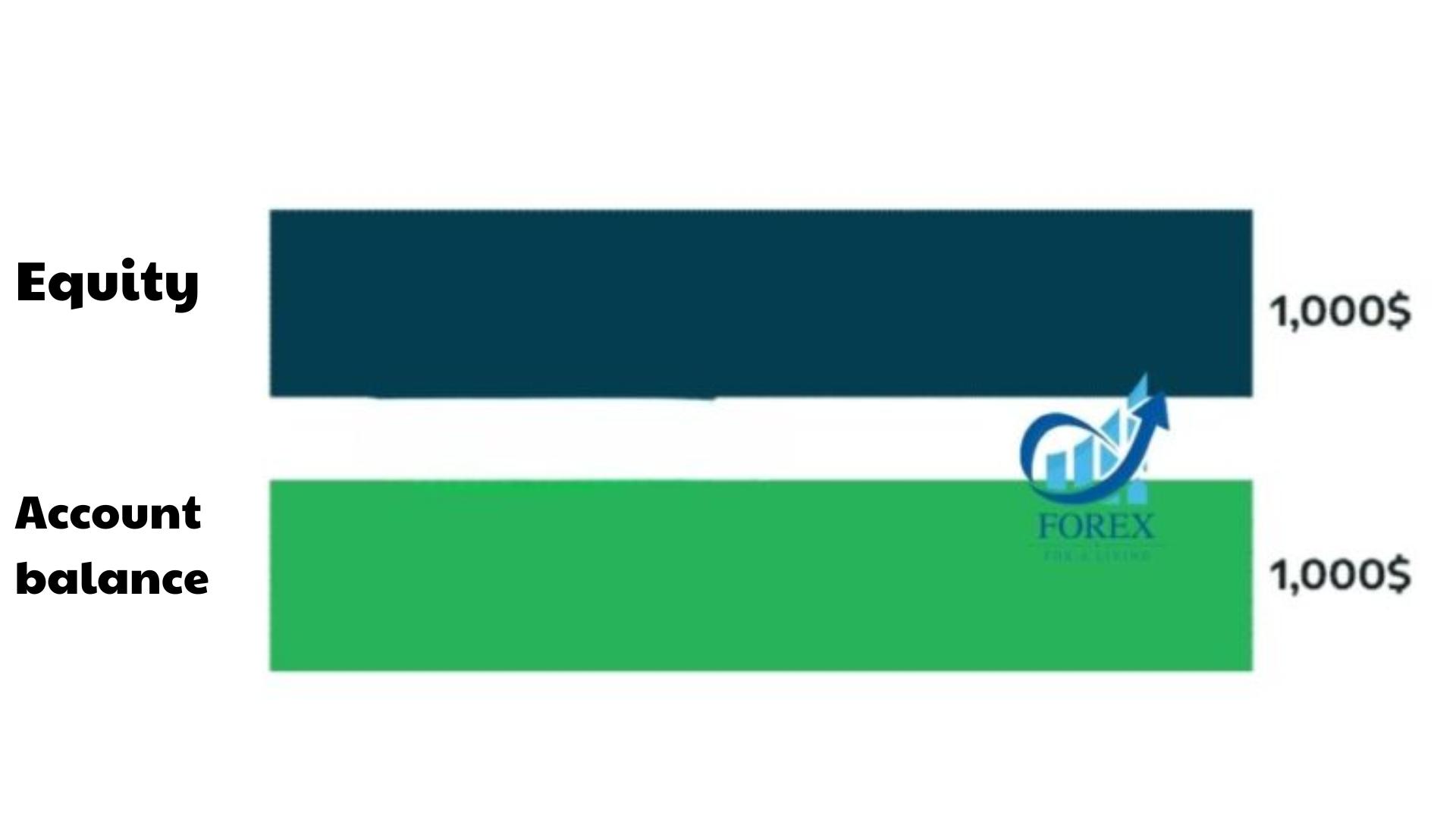
If no trades are open, the equity equals the account balance.
Example:
You deposit $1,000 into your trading account. Since no trades are open, your equity and account balance are the same: $1,000.
3.2.2. Equity Calculation With Open Positions
When trades are open, equity reflects the current account balance plus or minus the unrealized profits or losses of those positions.
Formula:
\text{Equity} = \text{Account Balance} + \text{Unrealized P&L}
Example:
- Account balance: $1,000
- Open trade with a floating profit: $200
Equity = $1,000 + $200 = $1,200
If there’s a floating loss of $100:
Equity = $1,000 – $100 = $900
Equity fluctuates in real time based on the market performance of your open positions.
This detailed breakdown highlights the role of equity in different contexts, helping traders and investors better understand and apply the concept.
3.2.2. Equity Calculation With Open Positions
When you have open positions, your account equity is the sum of your account balance and the unrealized profit or loss from those positions.
Formula:
Equity=Account Balance+Unrealized Profit/Loss\text{Equity} = \text{Account Balance} + \text{Unrealized Profit/Loss}
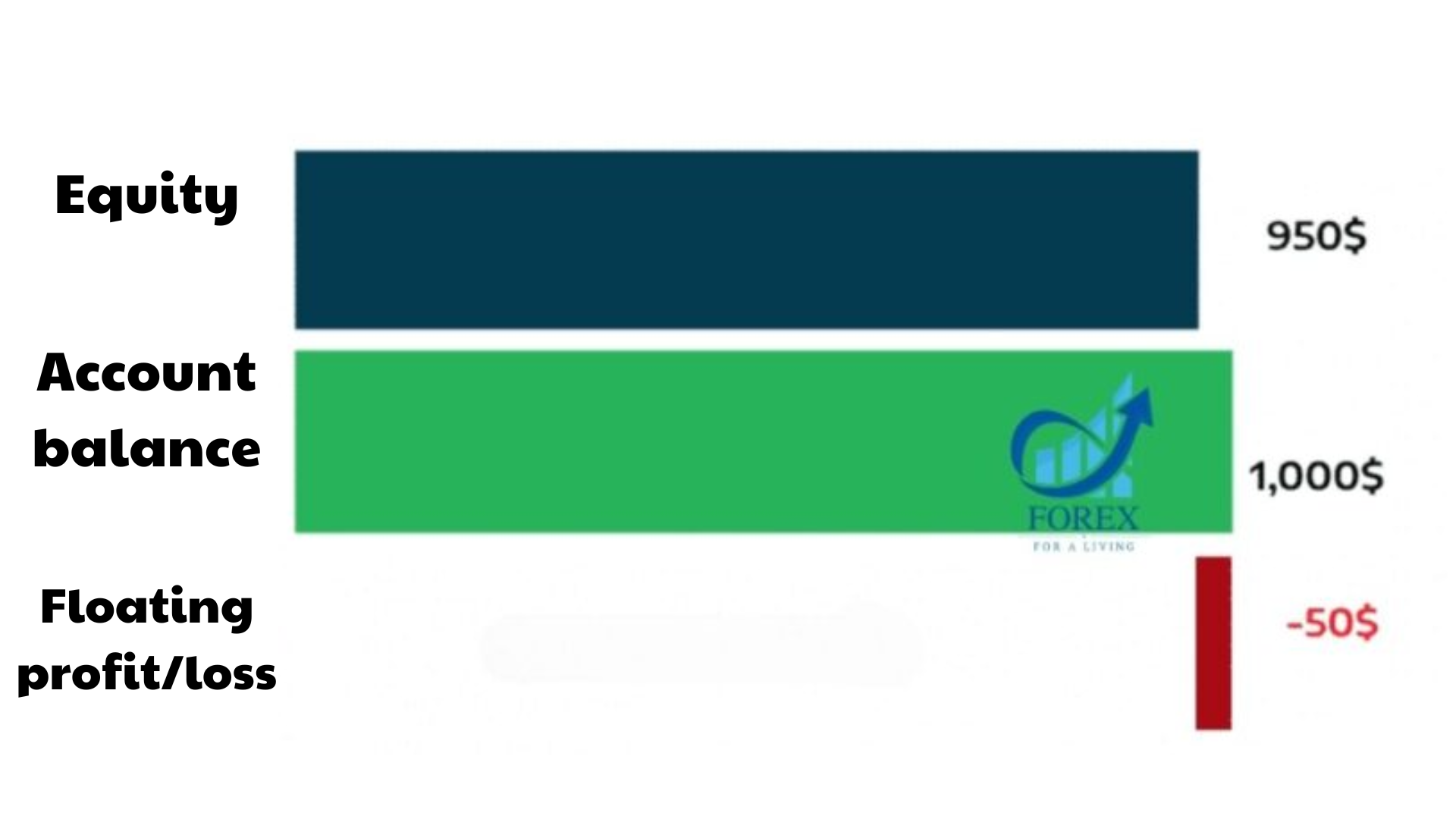
Example 1: Unrealized Loss
- Account balance: $1,000
- You follow a famous singer’s tweet suggesting a sell on GBP/USD.
- The trade moves against your expectation, showing an unrealized loss of $50.
Equity=1,000+(−50)=950
Thus, your current account equity is $950.
Example 2: Unrealized Profit
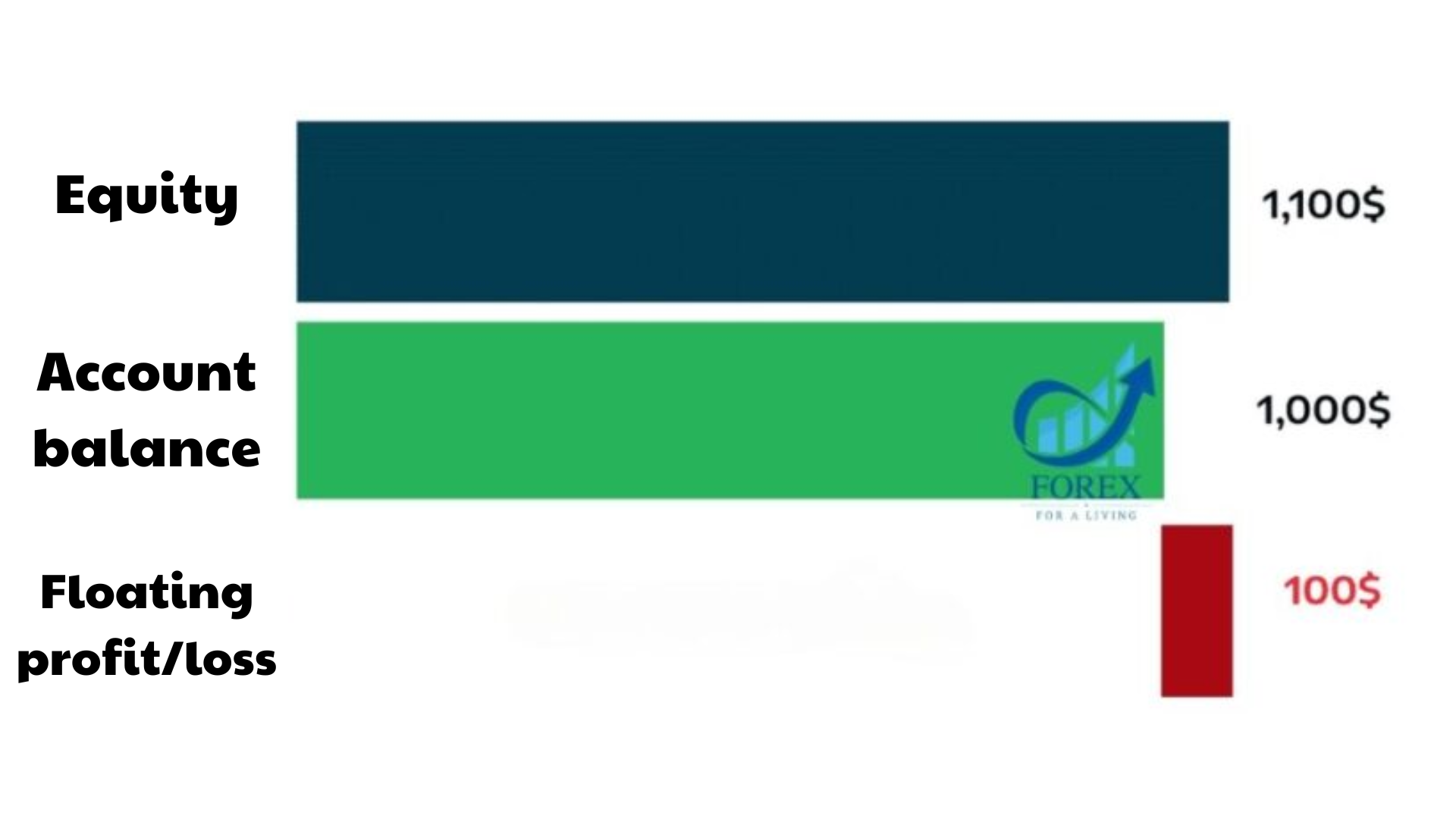
- Account balance: $1,000
- The same singer tweets about reversing her position to buy GBP/USD.
- You follow her lead, and the trade immediately moves in your favor, showing an unrealized profit of $100.
Equity=1,000+100=1,100
Your current account equity is now $1,100.
This demonstrates how equity fluctuates dynamically with the market, reflecting real-time profitability or losses from open trades.
Dynamic Nature of Account Equity
As long as you maintain open positions, your account equity will continue to fluctuate with market prices.
Equity reflects the “temporary” value of your account at a given moment. This is why it is often referred to as a “floating balance.” It only becomes your “real account balance” once you close all your trades immediately.
3.2.3. Differentiating Equity and Balance
When your account has no open positions, equity and balance are identical. However, if you have open positions, the two diverge.
Key Differences:
- Balance: Represents profit or loss from closed positions only.
- Equity: Reflects real-time calculations of profit/loss, including both open and closed positions.
This means that your balance does not reflect the actual funds available in your account at that moment, as equity accounts for unrealized gains or losses from open trades.
Example Scenario:
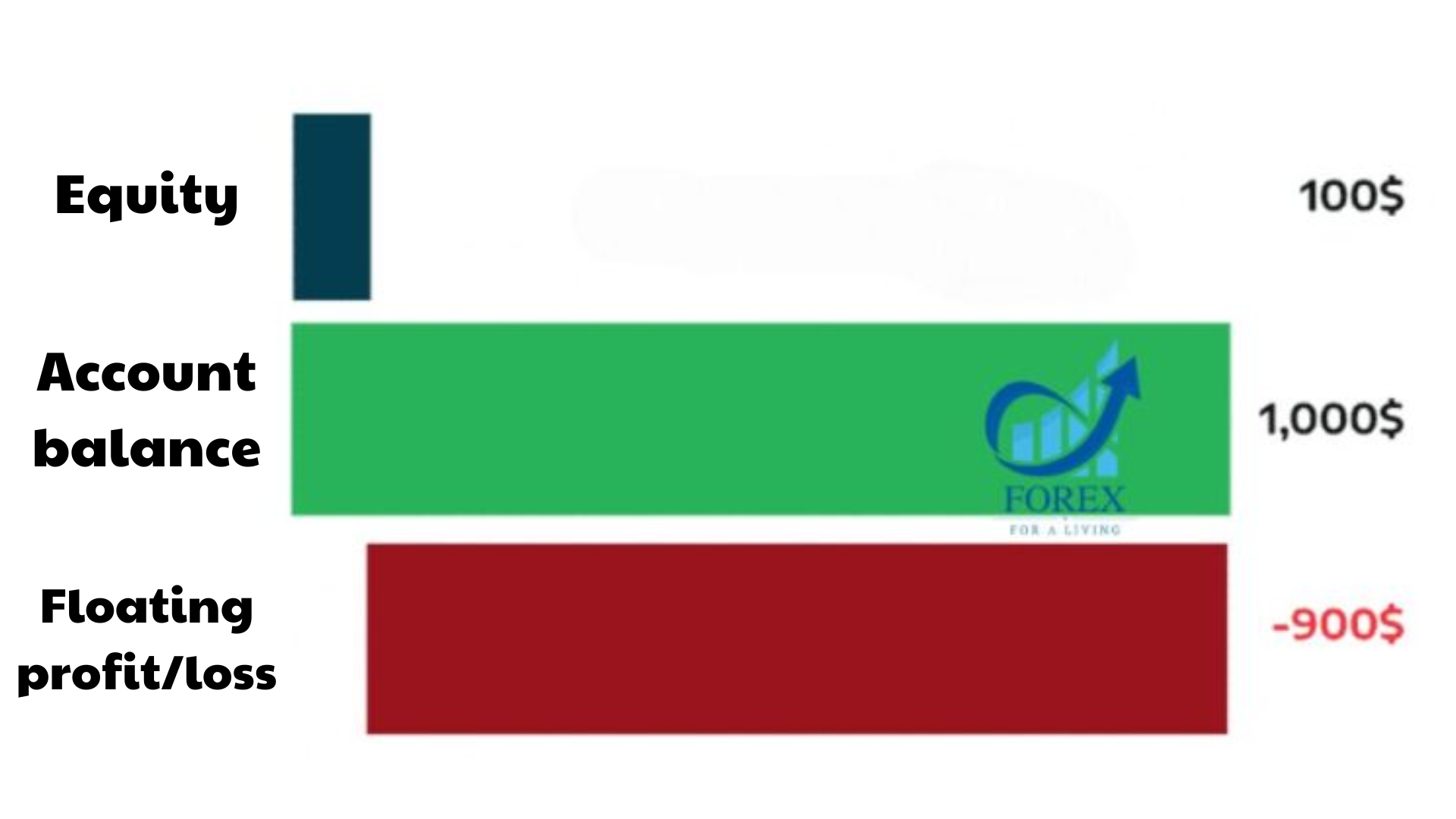
- Balance: $1,000
- Open trade with a floating loss: $900
Equity=Balance+Unrealized Profit/Loss\text{Equity} = \text{Balance} + \text{Unrealized Profit/Loss} Equity=1,000+(−900)=100\text{Equity} = 1,000 + (-900) = 100
In this case, even though your balance is $1,000, your actual equity is only $100 due to the large unrealized loss.
Understanding this distinction is crucial for managing risks effectively in Forex trading.
4. PRIVATE EQUITY VS. PUBLIC EQUITY
Whether you realize it or not, terms like “Private Equity” and “Public Equity” often come up when discussing Equity. But what do these terms actually mean, and how are they different?
4.1. Private Equity
4.1.1. What is Private Equity?
Private Equity (PE) refers to private equity capital, which is a form of investment in a business. Generally, this capital is not listed on a public stock exchange.
Private Equity involves funds and investors that directly invest in private businesses or take part in the acquisition of public companies. Once acquired, these companies are delisted from public exchanges.
Private Equity is considered a type of illiquid asset, unlike stocks and bonds traded on public markets.
In the field of venture capital, private equity investments are often directed toward startups or young companies with perceived high growth potential.
4.1.2. Characteristics and Mechanism of Private Equity
Private equity investments primarily come from institutional investors and accredited individuals who have substantial idle capital for long-term investments.
- Holding Period: Private equity investments usually require long holding periods.
- This is to allow time for companies to recover from difficulties or prepare for liquidity events like initial public offerings (IPOs) or sales to public companies.
Key Takeaways
Private Equity is a strategic long-term investment aimed at nurturing businesses or preparing them for significant financial events, often involving substantial initial capital and illiquid assets.
4. PRIVATE EQUITY VS. PUBLIC EQUITY
4.1. Private Equity
4.1.1. What is Private Equity?
Private Equity refers to private capital investments in businesses, typically not traded on public stock exchanges.
Private equity firms generate income through management fees and performance fees when investments yield profits.
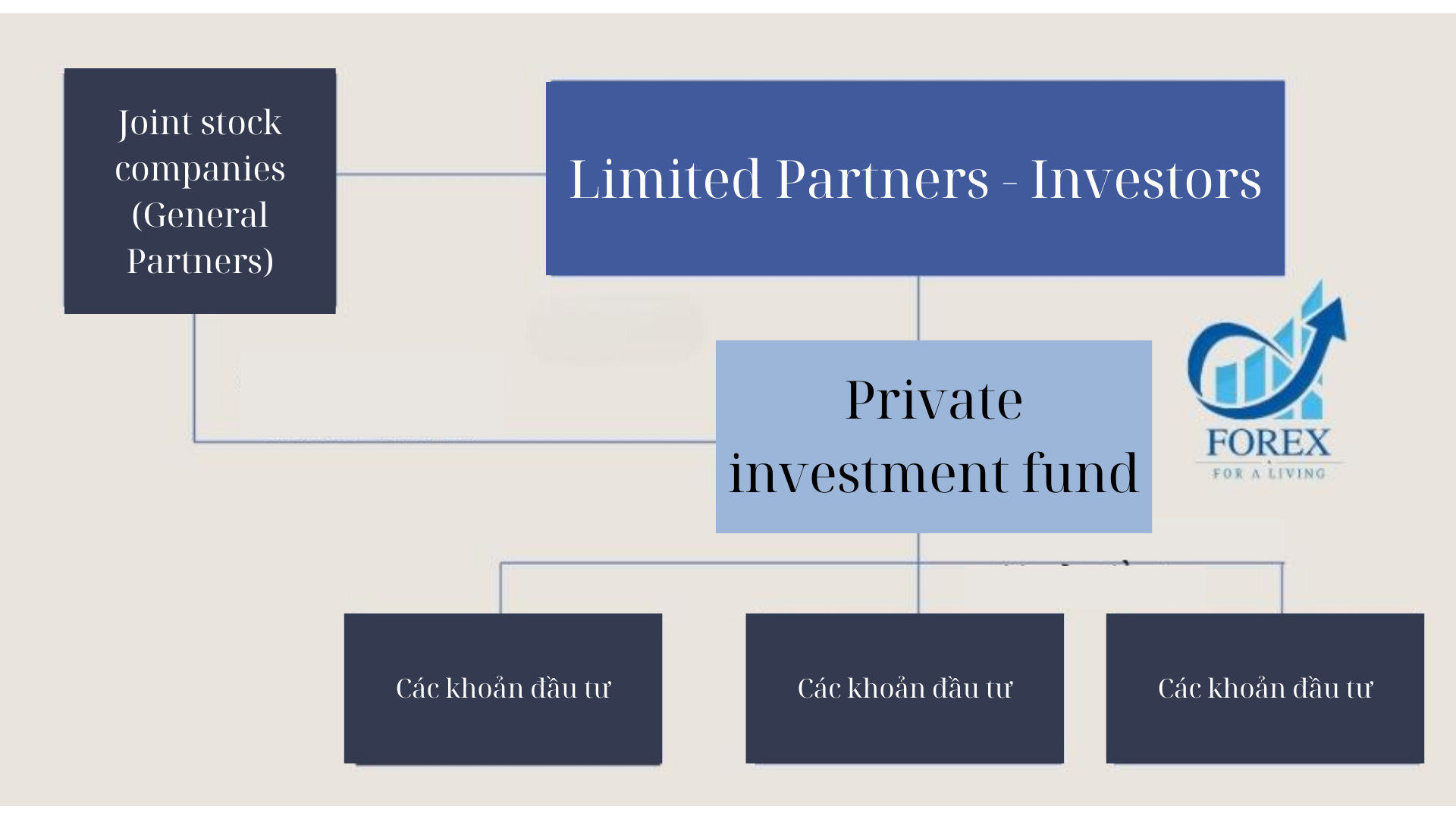
- General Partners (GPs): These are fund managers responsible for making investment decisions. They typically earn 20% of the profits (after deducting management fees) when the fund performs well.
- Limited Partners (LPs): Individuals or entities that contribute capital to the fund. They do not manage investments and bear risks only for the portion of capital they’ve invested.
4.2. Public Equity
4.2.1. What is Public Equity?
Public Equity refers to public capital investments, representing ownership in a publicly traded company.
Public equity investors hold annual meetings to assess a company’s business performance. If the performance is unsatisfactory, they may vote to replace the management team. All results must be publicly disclosed.
Unlike Private Equity, Public Equity is subject to significant public scrutiny and transparency requirements.
4.2.2. How Public Equity Works
Shares in Public Equity can be bought, sold, or traded on public markets, offering high liquidity.
- Ownership and Accessibility:
Individuals can own small portions of a company by purchasing publicly issued shares, turning the shares into public equity. - Liquidity:
Public equity shares can be sold within seconds on the market, providing easy access to cash. For example, Jeff Bezos leveraged public equity to transform Amazon into the world’s largest online retailer.
Risks:
However, public equity also faces risks from political instability and economic uncertainty. A drop in share value on the market can lead to significant losses for the company and its shareholders.
4.3. Differences Between Private Equity and Public Equity
| Aspect | Private Equity | Public Equity |
|---|---|---|
| Ownership | Ownership in private companies | Ownership in publicly traded companies |
| Liquidity | Illiquid; requires long-term commitment | Highly liquid; can be traded instantly |
| Transparency | Financial information disclosure not mandatory | Must disclose financial data publicly |
| Market Pressure | Minimal public scrutiny | Subject to significant public and market pressures |
| Investment Goals | Focus on long-term growth or turnaround strategies | Geared towards continuous performance and liquidity |
Both investment types have distinct characteristics that cater to different investor goals and risk profiles.

Translation:
Private equity investors can work based on long-term prospects, while public equity investors work based on short-term prospects due to public pressure.
Private equity targets high-net-worth individuals, whereas public equity targets the general public, who can buy, sell, or trade these shares.
Private equity investors can trade with one another or with the public, but only with the founder’s consent. Meanwhile, public equity investors can trade these assets on the open market without anyone’s approval.
Summary
In this article, we have likely addressed the key concerns and drawn the following conclusions:
– What is Equity in Forex? The methods for calculating equity when there are open trades in the account.
– Equity in accounting and Forex does not always share the same calculation methods or meanings.
– In Forex, equity is the account balance plus/minus unrealized profits (or losses) from open positions.
– Equity reflects the current value of your account/assets.
Additionally, you have gained some understanding of Forex-related concepts concerning Private vs. Public Equity. Private and public equities both have advantages in the investment world. Both are used to expand financial resources and raise capital for companies.
Don’t forget to check out other articles from TradaFX!
- t.me/finance_solutes
- Website: https://finance-solutes.com
- Hotline: +1 929 5636 439 ( Hotline )
- 26 Broadway, Suite 934, New York, 10004, US
