
 XM
XM Bybit
Bybit Binance
 Robinhood
 Webull
 IC Markets
 Pepperstone
 OKX
OKX Vantage
 VT Markets
 BingX
BingX Gate.io
 Kucoin
 MEXC
MEXC Exness
 Bitget
XEM Coin brings an almost complete difference compared to the coins and projects that Tradafx has introduced in previous articles. XEM Coin belongs to a project called NEM, so sometimes traders also refer to it as NEM Coin. Let’s explore what XEM Coin is, what’s special about this cryptocurrency, and evaluate its development roadmap right in this article!
1. WHAT IS NEM (XEM)?
NEM stands for New Economy Movement — a dual-layer blockchain similar to Ethereum but coded in Java, one of the most popular programming languages. The XEM coin project seeks to provide an efficient way to verify and transfer blockchain assets for enterprises.
One of the core missions of this platform is to enhance interoperability between private blockchains. Therefore, the NEM (XEM) platform acts as a bridge — the missing link — between private and public blockchains, allowing users to manage assets and data more efficiently.

In addition, another problem that the NEM project aims to address is supply chain management. Instead of the traditional supply chain management model, the NEM coin project provides an open, secure, and fast system that allows businesses to manage, access, and share verified data through various access control methods.
1.1. History of the NEM Cryptocurrency Project
The idea for the XEM coin project began in 2014 when a user named “utopianFuture” on the Bitcoin Talk forum proposed a fork from the NXT blockchain. However, after several discussions, the user and their team decided to develop an entirely new blockchain, not forked from any existing one. In March 2015, the NEM blockchain was officially launched.

Thanks to developer improvements, the XEM platform became more scalable and developed faster than the NXT blockchain. By 2016, the NEM Foundation — a nonprofit organization — was established to promote XEM token adoption, enhance marketing, brand awareness, and expand partnerships.
Beyond its technology and unique consensus mechanism, NEM gained notoriety due to its association with the massive $530 million Coincheck hack in early 2018.
1.2. XEM (NEM) Development Team
NEM was originally created by three developers under the pseudonyms: Jaguar0625, Bloody Rookie, and gimre. The core development team includes:
-
David Shaw – CEO
-
Lon Wong – Founding Advisor
-
Jeff McDonald – Founding Advisor
-
Alexandra Tinsman – President of the NEM Foundation
-
Ronel Li – Secretary
-
Ken Chan – Treasurer

Today, the NEM (XEM) platform is governed by a system of foundations, companies, and experts responsible for decision-making to protect investments and ensure that the XEM token ecosystem is community-supported. Founding members of the NEM Foundation include Erik Van Himbergen, Jeff McDonald, Lon Wong, and Leon Yeoh.
The NEM Group Board of Directors oversees all operations of NEM Software, NEM Trading, and NEM Ventures. The board includes experienced staff and professionals who evaluate proposals and practical applications for future deployment.
2. THE DIFFERENCE OF THE NEM (XEM) PLATFORM
Despite being launched in 2015, XEM still ranks in the top 100 cryptocurrencies by market capitalization according to CoinMarketCap — thanks to its unique features that differentiate it from other blockchains and cryptocurrencies.
2.1. Smart Asset System
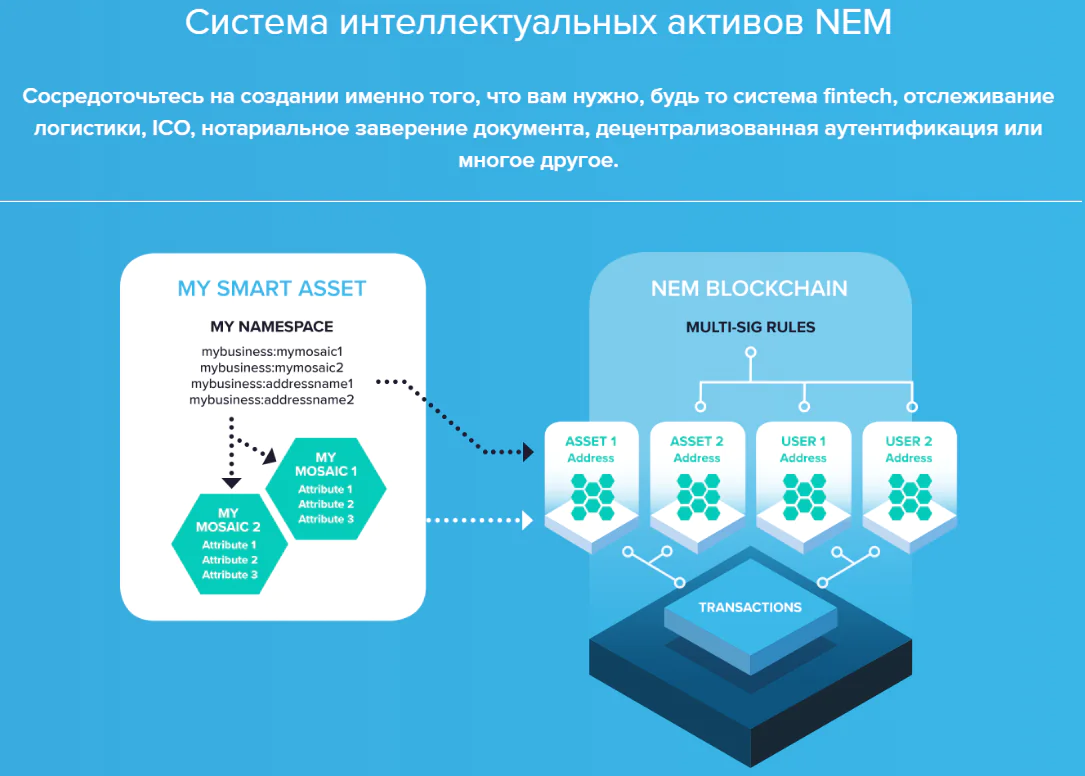
XEM’s blockchain is built on the Smart Asset System — an API designed to help software developers more easily build applications on the NEM blockchain.
This system is meant to be an open, highly customizable blockchain solution, consisting of:
-
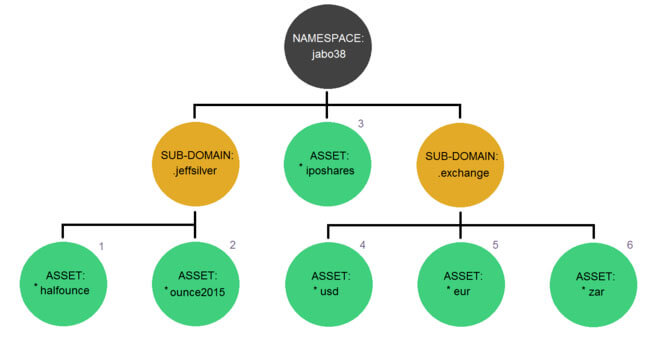
Mosaic: Digital assets and custom tokens integrated within NEM, stored in Namespaces and sub-namespaces. Technically, XEM itself is a mosaic on the NEM network.
-
Address: Storage for contracts, documents, coins, or any project records, with data that can be updated as needed.
-
Transaction: Allows the transfer of smart assets (mosaics) from one address to another.
Developers can easily build and deploy apps for crowdfunding, voting, stock ownership, and more using this system.
2.2. Proof of Importance (PoI) Consensus
Instead of PoS or PoW, XEM uses a Proof of Importance algorithm. The more transactions or XEM tokens you generate, the higher your “importance score.” This score affects how frequently you can participate in the “harvesting protocol” (linked to an existing supernode) or mine XEM coins.
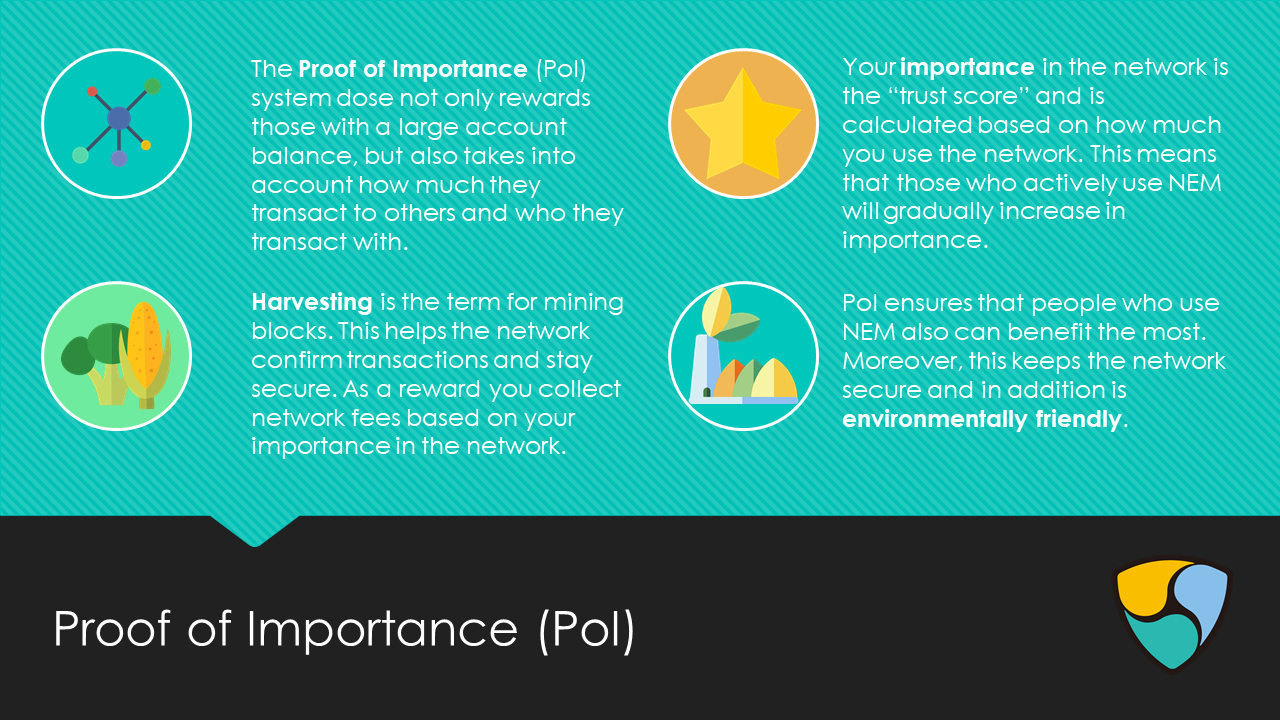
PoI requires holding at least 10,000 vested XEM coins to create new blocks. These are different from regular XEM bought on exchanges — you need to hold them in a network wallet to vest them.
The NEM network is designed to run on regular nodes without requiring power-hungry or expensive hardware, minimizing environmental impact and allowing broader participation.
3. WHAT IS XEM COIN?
XEM is the native token of the NEM blockchain and plays a vital role in its ecosystem. It incorporates elements of other cryptocurrencies like Bitcoin, while promoting decentralization, financial freedom, and equality — aiming to empower users and create a new economy.
However, this goal may be hard to achieve in a truly free cryptocurrency market. In short, XEM holders gain voting rights and the ability to approve new blocks.
3.1. Basic Information about NEM (XEM)
A familiar section in Tradafx’s crypto content — here are the essentials:
-
Symbol: XEM
-
Blockchain: NEM – New Economy Movement
-
Consensus Mechanism: PoI
-
Current Price: 0.07104 USD
-
Max Supply: 8,999,999,999 XEM
-
Circulating Supply: 8,999,999,999 XEM
3.2. How to Create a NEM Wallet
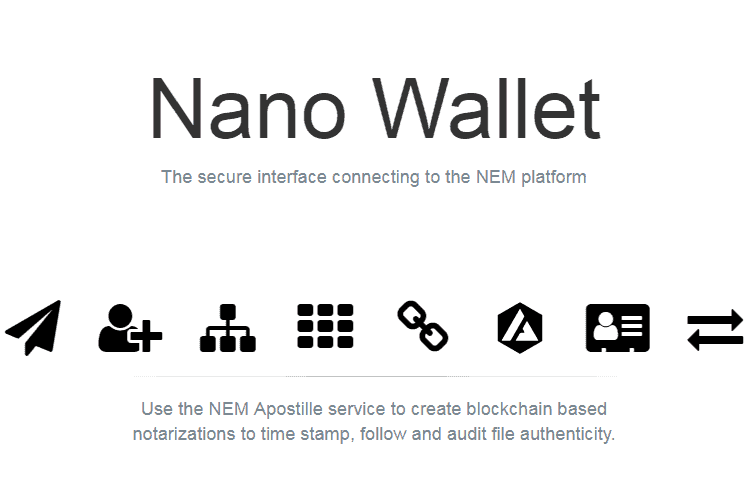
XEM is supported by standard wallets like Trust Wallet and SafePal. NEM has also developed its own: NEM Wallet. Here’s how to create one:
-
Download NEM Wallet from AppStore or CH Play (also available in desktop version).
-
Open the downloaded file and launch the wallet.
-
Click “Register” → Select “Simple Wallet” → Click “Ready.”
-
Choose “Mainnet” → Click “Next.”
-
Set a wallet name and password (note: cannot be recovered if lost).
-
Click “Next” → “Start” to generate a Private Key. Read the warning → Click “Understood.”
-
Backup using “Download Wallet” or “Show raw wallet file” (save the data offline).
-
Click “I have my wallet file” → “Show Private Key” to back it up.
-
Click “I have my private key and password” → “I agree.”
Now your XEM Wallet is ready for use.
4. HOW TO MINE XEM COIN?
Many investors want to mine blockchain-native coins. As mentioned, XEM’s unique algorithm makes it easier. Here are a few mining options:
-
Register on MinerGate: Mine XEM and trade it directly for other coins like XEM/USD.
-
GPU Mining: If you have a GPU rig (commonly used for ETH), redirect it to mine XEM.
-
JavaScript Mining: Use MinerGate to mine XEM directly on your browser while keeping the window open.
5. CONCLUSION
In early 2021, the NEM (XEM) project launched the Symbol blockchain platform, and NEM’s official websites are transitioning accordingly. With this article, you now have a clearer view of what makes XEM Coin special and its potential. You can follow the project’s social channels for the latest updates on its development roadmap.
- t.me/finance_solutes
- Website: https://finance-solutes.com
- Hotline: +1 929 5636 439 ( Hotline )
- 26 Broadway, Suite 934, New York, 10004, US
