
 XM
XM Bybit
Bybit Binance
 Robinhood
 Webull
 IC Markets
 Pepperstone
 OKX
OKX Vantage
 VT Markets
 BingX
BingX Gate.io
 Kucoin
 MEXC
MEXC Exness
 Bitget
Surely the term Spot Market appears in many places in the Forex market, making traders curious. So what is Spot Market? How it works and other related information will be revealed in this article. Please join us to find the answer to your own question!
What is Spot Market?
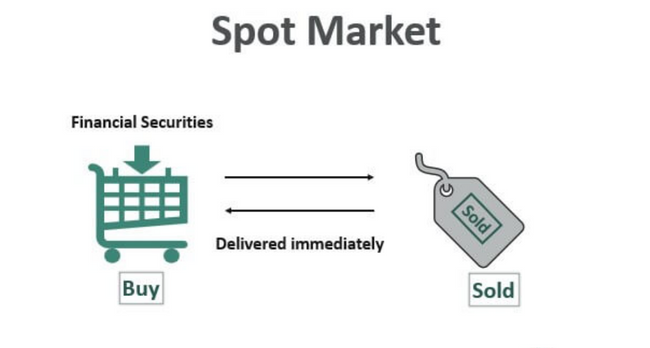
Spot Market, also known as Spot Market, is a public financial market where many financial instruments including currencies, securities, and commodities are transferred immediately or bought and sold in a short period of time.
This concept also exists in the logistics field (import and export). Specifically in this field, trucks leave the factory and carry goods every day. Immediate transactions here are short-term orders and export orders, occurring at the current market price.
What is Spot Trading?
Spot Trading has a meaning similar to Spot Market, specifically referring to transactions in the spot market. The activities of exchanging, buying, and selling commodities, financial assets, or currencies will follow the operation mechanism of the spot market.
A spot transaction is understood as the exchange that takes place in a very short period of time (almost immediately) of financial instruments. A common question is, what does Spot in trading mean? Spot in trading, whether in cryptocurrency transactions or elsewhere, is similar to Spot Trading; it is also the exchange of digital currencies at market prices.
How does the Spot Market work?
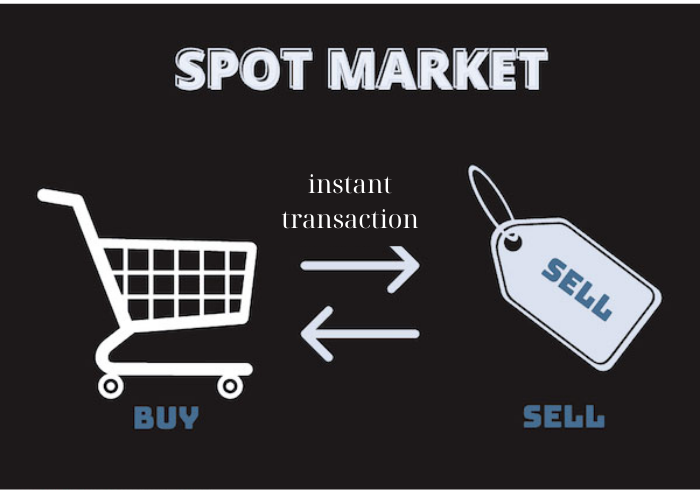
The Spot Market is also known by two other names: Physical Market and Cash Market. The buying, selling, and payment actions in the spot market typically happen immediately and on the spot. However, in well-organized markets, the process of transferring goods and completing payment may take up to two business days. Still, the trade agreement between the buyer and seller is executed and becomes effective right away.
This operating method is in stark contrast to two other markets: the Futures Market and the Forward Market. In these markets, buyers and sellers trade at an expected price in the future or at a specific forward price. Along with this, the transfer of goods and ownership happens in the future. Even though the contract may be executed today, payment will be settled at a later date.
Types of Assets Traded in the Spot Market
The types of assets allowed to be traded in the Spot Market include: foreign exchange, equities, and fixed-income instruments (such as treasury bills, bonds, etc.). In addition, commodities like energy, agricultural products, livestock, and metals are also accepted in the spot market. In general, both perishable and non-perishable goods can be traded in the Spot Market.
Among them, the foreign exchange market is one of the largest spot markets in the world. Investors trade currencies daily, with market turnover reaching up to $6 trillion per day. Today, it is considered the most traded asset in the world.
On the other hand, regarding the most traded standard commodities, crude oil stands out. A new commodity introduced in the spot market is technology, which includes bandwidth and mobile minutes.
Characteristics of the Spot Market

- Spot Price (Spot Price) and Spot Rate (Spot Rate) are the two price levels set for transactions that can be settled immediately.
- The process of asset transfer is carried out immediately or within T+2.
- The payment step is also executed immediately or within T+2.
Example of the Spot Market
When learning about the Spot Market, you should understand the two definitions below:
- Exchange: This is an organization that closely connects traders to buy and sell commodities, options, futures contracts, and many other financial instruments.
- Trading Floor: A place that provides the amount of money and available prices for traders to easily enter the market based on orders executed by participants.
- A classic example of the spot market is the NYSE (New York Stock Exchange), where all the buying and selling of stocks takes place actively. An example of the futures market is CME (Chicago Mercantile Exchange), where trading in futures contracts happens.
Stock Trading Example
- An investor wants to own 1000 shares of Apple (APPL) on the NASDAQ exchange. He will need to contact a broker or exchange to purchase the stock at the market price.
- For instance, if the current market price is $160.12, the transfer of funds will occur immediately as the broker transfers the money to the seller at $160.12. The investor will also acquire the shares once the funds are transferred to the seller.
Foreign Exchange Trading Example
- For instance, in the UK, a home goods store is offering a 30% discount for international customers. The condition is that payment must be completed within 5 days of placing the order.
- In the US, a home goods store owner sees the offer and places an order through the website totaling $10,000. She needs to buy British Pounds (GBP) to pay for the order, and the exchange rate at the time is GBP/USD = 1.1233. Therefore, the $10,000 transaction will buy 8,902.34 GBP. The transaction will be processed within two business days for the shop owner to receive 8,902.34 GBP and continue paying the UK store for the 30% discount.
Should You Trade in the Spot Market or Futures Market?
In addition to the Spot Market, the Futures Market is also widely discussed in trading. So what are the differences between these two markets, and which one is better for investors? To answer that, we will go through some key concepts.
What is Spot Price?
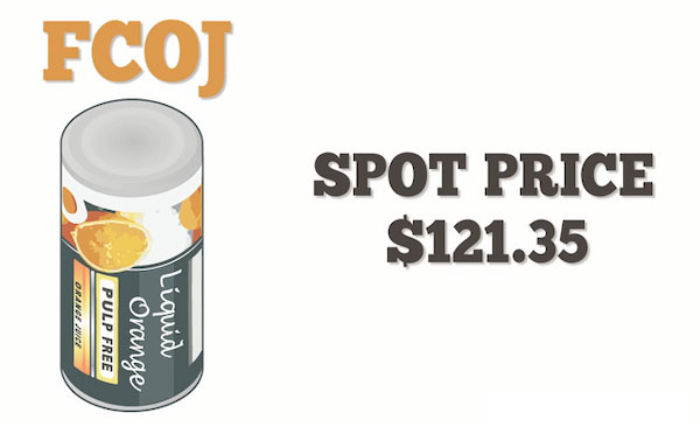
Spot Price (translated as giá giao ngay in Vietnamese) is the price of a commodity at the current moment in the market. At this price, all goods and assets can be bought or sold instantly, for example: stock prices.
In most liquid markets, the spot price can change every second. When an order is completed, new orders usually follow.
Although the spot price can fluctuate based on geography or time, it is generally consistent across the entire financial market. This consistency helps prevent issues related to exploiting asset discrepancies across different exchanges.
What is Futures Price?
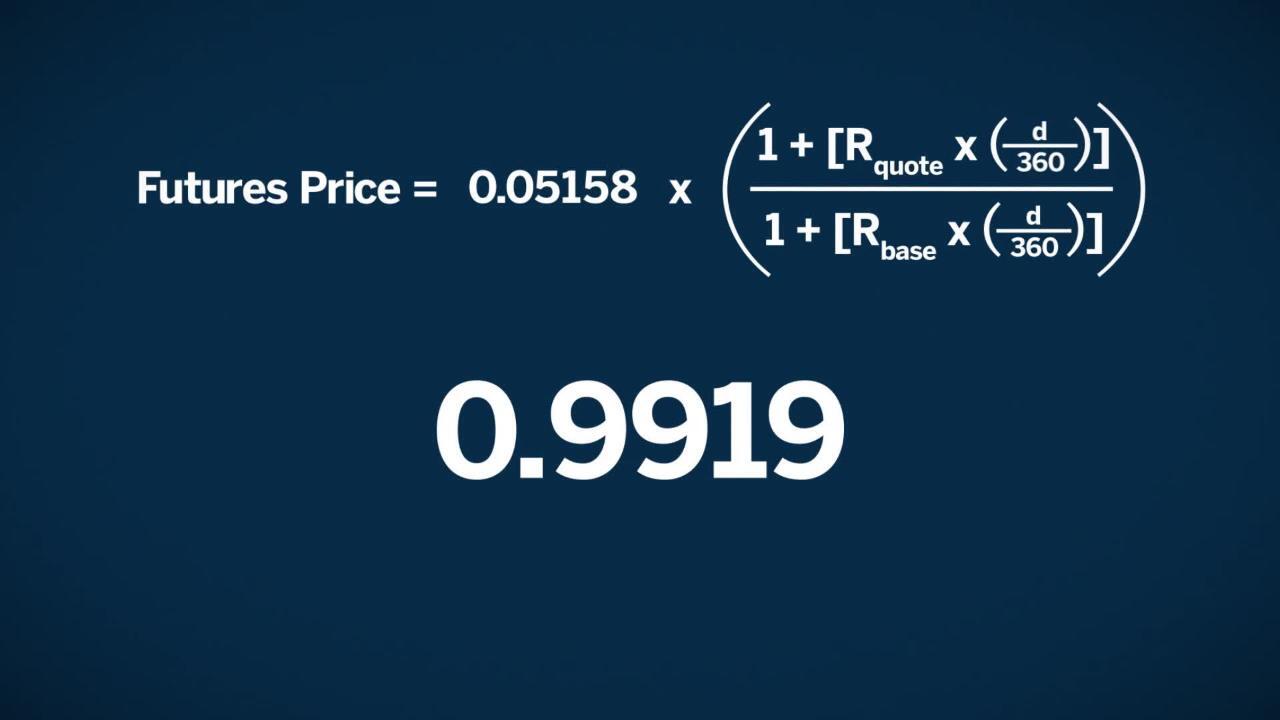
Futures Price (translated as Giá hợp đồng tương lai in Vietnamese) applies to transactions involving assets and commodities that occur at a specific time in the future. The Futures Price is estimated by adding the current market price at that moment to the costs incurred before the transfer of goods. These costs can include insurance fees, interest rates, storage fees, or other associated costs.
For example, if the price of crude oil is currently $1,200 per barrel, and the storage cost for 6 months (for commodities) is $5 per barrel, then the futures contract price for crude oil in 6 months would be $1,206.51. Assuming the interest rate is 0.25%, the formula would be: Futures Price = ($1,200 + $5) * e^(0.0025 * 0.5).
Summary of Key Differences Between Spot Market and Futures Market
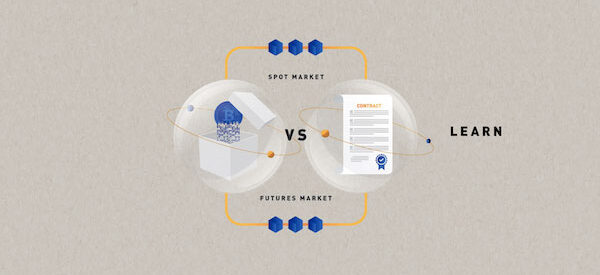
Spot Market and Futures Market have three basic differences: cost, timing of transactions and expiration, and risk assurance. Let’s explore each of these differences one by one!
Cost
The price set in a futures contract is based on the current market price or the spot price. The futures price will also depend on predictions of supply and demand for the commodity in the future.
For example, if crude oil production is delayed, it’s expected that a shortage will occur in the future, which will drive the price of crude oil up significantly.
Additionally, futures prices incur certain costs such as storage fees, insurance, etc., which continue until the transfer of goods is completed at a certain point in the future. Futures contracts on OTC (over-the-counter) exchanges do not incur interest fees if positions are held overnight.
The terms “margin” and “leverage” in futures contracts are also different from those in Forex. Every transaction in the futures market can control a specific amount of goods or assets. For example, if a futures contract is agreed upon for 1,000 barrels at $50 per barrel, the contract value will be $50,000 in the future.
When trading this futures contract, you must deposit an initial margin or security bond. This margin ensures that the contract will be executed as expected in the future.
Timing of Transactions and Expiration
The second difference lies in the timing of transactions and contract expiration.
Spot Market allows transactions to occur immediately or at the point of exchange. The spot rate (price) of a commodity will fluctuate based on the real-time supply and demand in the market.
In contrast, the futures market determines prices based on a future point in time. The price is agreed upon today, with buyers hoping the price will rise over time and sellers hoping to close the deal at a profit.
The Spot Market has no expiration date for contracts, while Futures Market contracts will expire at a specific time mentioned in the contract.
Risk Assurance
Risk assurance means holding two or more positions at the same time to offset any losses in one position with profits from another. This method can be used to protect a spot position with a futures position.
In practice, traders use futures contracts to both hedge risks and speculate against the spot market. For example, if you expect the price of gold to fall, you might sell your position in the gold market through futures. Conversely, if you expect the price of gold to rise quickly, you might buy and hold a futures position over time.
Advantages and Disadvantages of Spot Market
Advantages
- The Spot Market has a transparent public market, high flexibility, and excellent liquidity.
- Transactions are easy to execute and settle instantly.
- The market does not require a minimum capital investment.
- Investors even have the opportunity to hold or make other agreements if they think it will bring higher profits than their current transaction.
Disadvantages
- There are still risks in the market, especially for volatile assets.
- It is not feasible to create a long-term plan in the Spot Market.
- Prices in this market can be influenced by risks such as bankruptcy.
- Many commodities require physical delivery, e.g., crude oil.
I hope this article helps you better understand the concept of the Spot Market and other related information. Wishing you success in your investment journey!
- t.me/finance_solutes
- Website: https://finance-solutes.com
- Hotline: +1 929 5636 439 ( Hotline )
- 26 Broadway, Suite 934, New York, 10004, US
